Introduction
Even a well-planned event can face unexpected challenges. A speaker might cancel at the last minute, bad weather could disrupt an outdoor venue, or a technical failure might delay attendee check-in. While some issues are minor, others can affect safety, budgets, and the overall event experience.
This is why event risk management is an important part of event planning. By identifying potential problems early and preparing practical solutions, organizers can reduce disruptions and handle unexpected situations more confidently. Whether you're organizing a corporate conference, a festival, or a virtual event, having a clear risk management process helps keep your event on track.
What Is Event Risk Management and Why Is It Important?
Event risk management is the process of identifying, assessing, and addressing situations that could affect an event's safety, finances, operations, or reputation.
It isn't about predicting every possible problem. Instead, it helps organizers understand what could go wrong, how serious the consequences might be, and what steps they can take to minimize the impact.
Effective risk management helps protect attendees, prevent unnecessary expenses, maintain smooth operations, and build trust. It also allows teams to make quicker decisions when plans change, rather than scrambling to find solutions at the last minute.
How to Identify and Assess Risks Before an Event
Risk assessment should begin early and continue throughout the planning process. Here's how to approach it.
1. Review Every Aspect of the Event
Look at the venue, registration process, vendors, transportation, technology, staffing, and attendee movement. Consider what could go wrong at each stage. For example, an outdoor event may face weather disruptions, while a conference could experience overcrowded sessions or check-in delays.
2. Evaluate Likelihood and Impact
An event risk assessment involves understanding how likely a problem is and how seriously it could affect the event. A minor printing delay may have little impact, but a blocked emergency exit requires immediate attention.
Prioritize risks that could threaten safety, violate legal requirements, or cause major operational disruption.
3. Consult Your Team
Speak with venue managers, vendors, security personnel, and volunteers. They may identify issues that are easy to overlook during planning, such as delivery delays or insufficient entry points.
4. Use an Event Risk Assessment Checklist
An event risk assessment checklist helps ensure important areas aren't missed.
- Venue capacity, accessibility, and emergency exits are checked.
- Medical assistance and emergency contacts are available.
- Weather-related backup arrangements are in place.
- Vendors and suppliers have confirmed their responsibilities.
- Registration, ticket scanning, and payment systems have been tested.
- Security arrangements and access controls are established.
- Backup power, internet, and essential equipment are considered.
- Staff know their responsibilities and emergency procedures.
- Attendee communication methods are ready.
Adapt this checklist to your event's size, location, and specific requirements.
Common Event Risks Organizers Should Prepare For
Understanding common event planning risks makes it easier to prepare appropriate preventive measures.
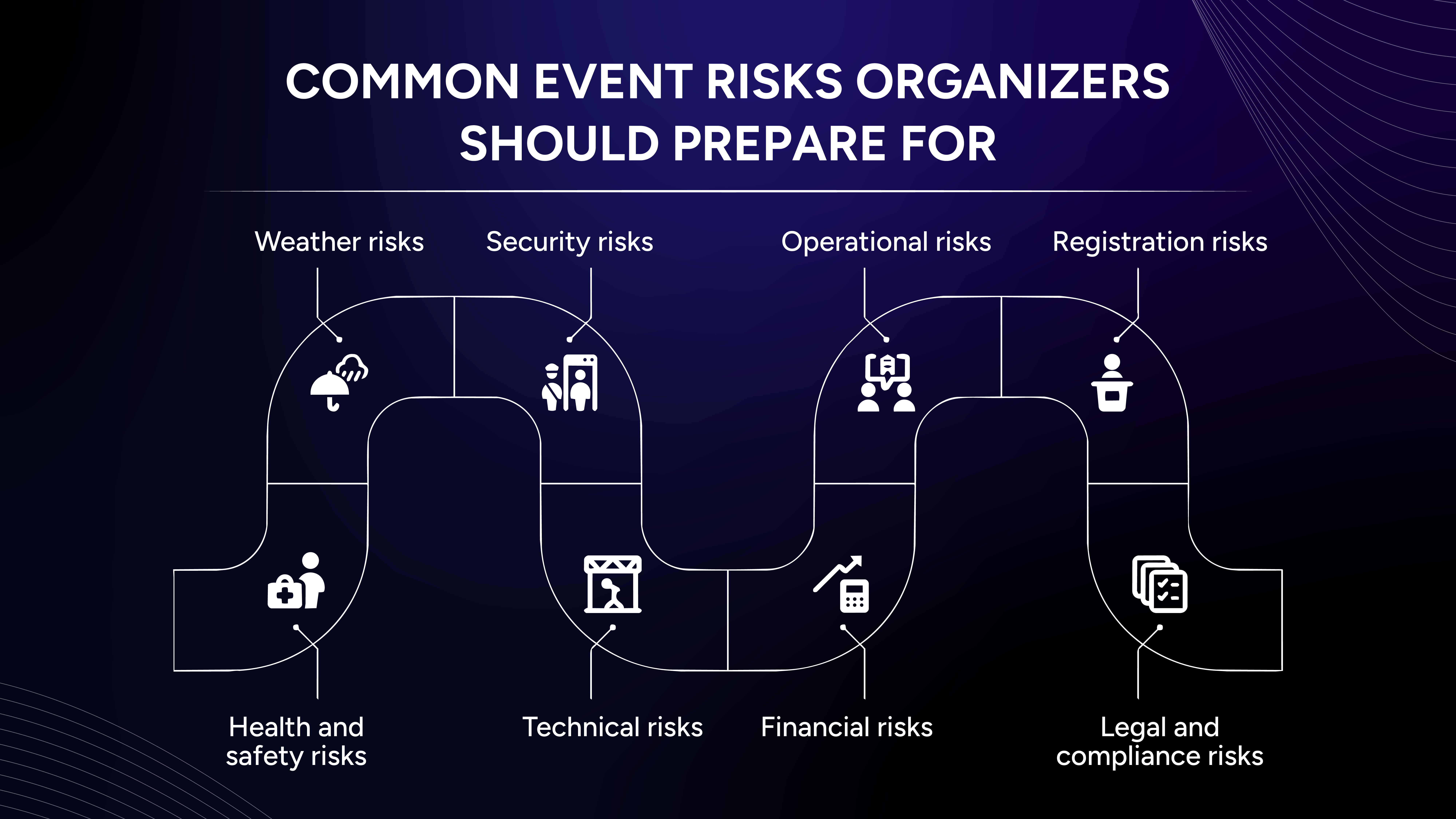
- Health and safety risks: Medical emergencies, overcrowding, fire hazards, and accidents can put attendees at risk. Inspect the venue, keep emergency exits clear, and establish evacuation procedures.
- Weather risks: Rain, extreme heat, and strong winds can disrupt outdoor events. Monitor forecasts and arrange suitable shelter or an alternative venue where possible.
- Security risks: Unauthorized access, theft, and crowd-control issues require careful planning. Effective event security management includes access controls, trained personnel, and clear escalation procedures.
- Technical risks: Internet outages, faulty equipment, and registration system failures can disrupt the attendee experience. Test essential systems in advance and prepare backup options.
- Financial risks: Low ticket sales, unexpected expenses, and vendor price changes can affect the budget. Track spending and maintain contingency funds.
- Operational risks: Vendor cancellations, delayed deliveries, and staff shortages can affect schedules. Confirm arrangements in writing and identify alternatives for critical services.
- Registration risks: Incorrect attendee details, duplicate bookings, and long check-in queues can create confusion. Test the registration journey and prepare a backup check-in process.
- Legal and compliance risks: Missing permits, inadequate safety arrangements, or improper handling of attendee data can create serious problems. Check applicable requirements and review relevant contracts and privacy practices before the event.
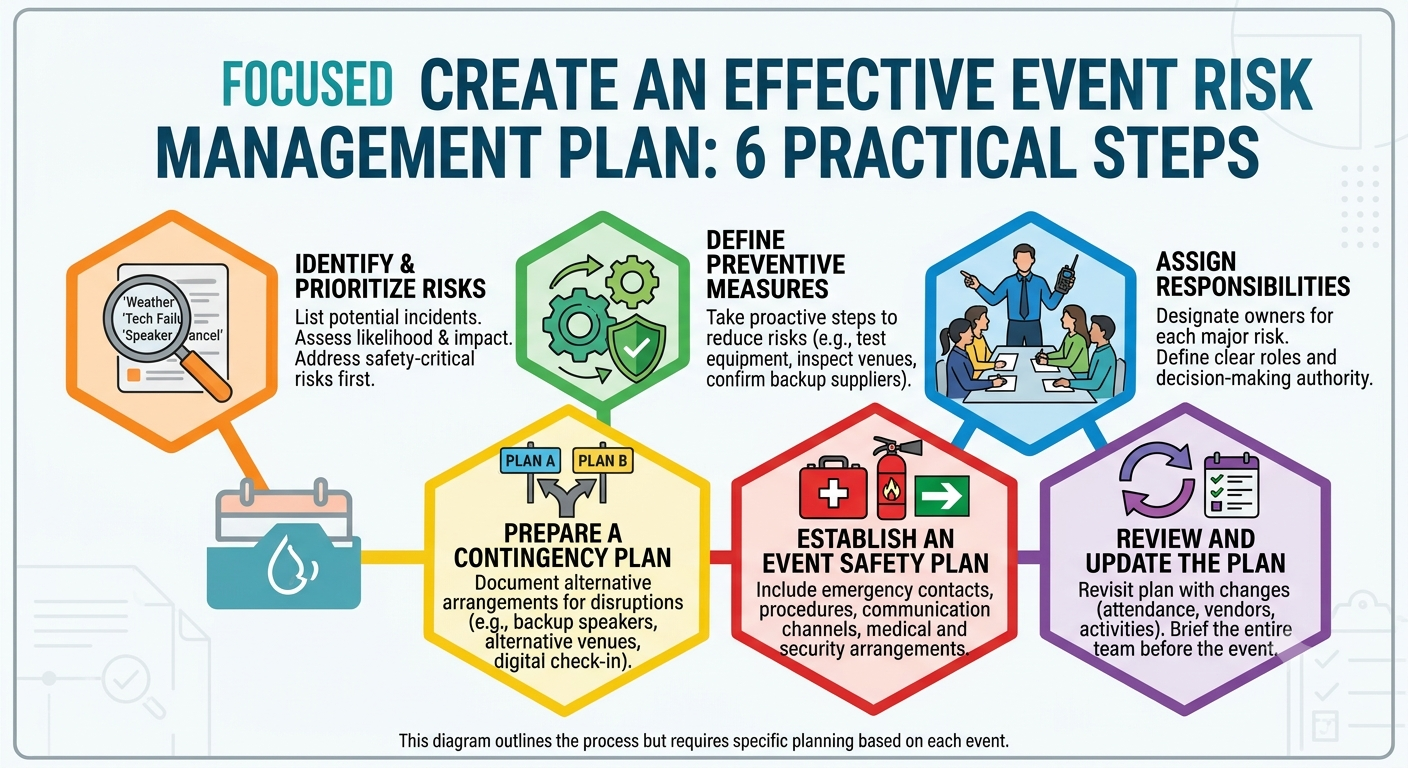
How to Create an Effective Event Risk Management Plan
An event risk management plan outlines how your team will prevent, monitor, and respond to potential problems. It should be practical, easy to understand, and accessible to everyone responsible for implementing it.
Follow these steps to build one:
Step 1: Identify and prioritize risks.
List potential incidents and assess their likelihood and impact. Address safety-critical risks first.
Step 2: Define preventive measures.
Decide what can reduce the chances of each problem occurring. This could include equipment testing, venue inspections, or confirming backup suppliers.
Step 3: Assign responsibilities.
Give each major risk a designated owner. Team members should know whom to contact and who has the authority to make important decisions.
Step 4: Prepare an event contingency plan.
Document alternative arrangements for likely disruptions. For example, identify a backup speaker, an alternative check-in method, or a suitable response to severe weather.
Step 5: Establish an event safety plan.
Include emergency contacts, evacuation procedures, communication channels, and relevant medical and security arrangements. Coordinate with the venue and qualified professionals where necessary.
Step 6: Review and update the plan.
Revisit it when attendance estimates change, vendors are replaced, or new activities are introduced. Brief the team before the event begins.
How to Mitigate and Respond to Event Risks
Planning for risks is only half the job. Organizers also need to ensure the team can respond effectively when something goes wrong.
Here are some practical event risk management strategies:
- Focus on prevention: Inspect the venue, test equipment, confirm vendor arrangements, and address identified hazards before event day.
- Keep communication clear: Establish escalation procedures and prepare message templates for schedule changes, venue updates, and cancellations.
- Train your team: Brief staff and volunteers on their responsibilities, emergency contacts, and incident-reporting procedures.
- Keep backups ready: Maintain spare equipment, alternative suppliers, offline attendee records where appropriate, and contingency funds.
- Monitor operations: Watch for growing queues, schedule delays, technical issues, and changing weather conditions so the team can act early.
- Review incidents: After the event, document what happened, what worked, and what needs improvement. Use these findings to strengthen future plans.
For serious emergencies, follow established safety procedures and instructions from the relevant authorities. Attendee safety should always take priority over keeping the event schedule unchanged.
How Event Technology Can Support Event Risk Management
Event technology can help organizers manage information, coordinate teams, and reduce operational errors. Although it cannot replace emergency planning or trained safety personnel, it can support several aspects of risk management.
Registration and check-in: Platforms such as KonfHub help organizers manage registrations, tickets, and attendee check-in. Testing these processes beforehand and preparing a backup method can help reduce entry delays.
Centralized event information: Event pages and apps make schedules, venue details, and attendee instructions easier to access, reducing confusion when plans change.
Team coordination: Digital tools help teams share schedules, updates, and responsibilities. Clear access permissions and reliable communication channels are essential.
Reports and attendance data: Registration and attendance reports help organizers estimate staffing requirements, plan entry arrangements, and understand participation patterns.
The key is to use technology as part of a broader risk management process, supported by clear responsibilities and practical backup arrangements.
Conclusion
Effective event risk management starts well before event day. By identifying potential problems, assessing their impact, and preparing clear response procedures, organizers can reduce disruptions and protect the attendee experience.
A practical event risk management plan, regular team briefings, and suitable technology can make unexpected situations easier to handle. While no event is entirely free from risk, being prepared helps organizers make better decisions and run events with greater confidence.
FAQs
- What is event risk management?
Event risk management is the process of identifying, assessing, and addressing potential problems that could affect an event's safety, budget, operations, or reputation. It helps organizers prepare for unexpected situations and minimize disruptions. - Why is risk management important for events?
Risk management helps protect attendees, control unexpected expenses, prevent operational disruptions, and ensure the event runs smoothly. It also allows organizers to respond more effectively when plans change. - What are the most common risks at events?
Common event risks include medical emergencies, severe weather, security concerns, technical failures, vendor delays, budget overruns, registration issues, and legal compliance problems. The risks vary depending on the event's size, location, and format. - How do you conduct an event risk assessment?
Start by reviewing every aspect of the event, including the venue, vendors, registration, staffing, and technology. Identify potential problems, assess their likelihood and impact, prioritize them, and document preventive measures and responsible team members. - What should an event risk management plan include?
An event risk management plan should include a list of identified risks, their likelihood and impact, preventive measures, assigned responsibilities, emergency procedures, communication protocols, and contingency arrangements for unexpected disruptions. - How can event organizers reduce risks?
Organizers can reduce risks by inspecting venues, testing equipment, confirming vendor arrangements, training staff, establishing emergency procedures, and preparing backup resources. Using event technology for registration, check-in, and communication can also help reduce operational errors. - What is the difference between an event risk assessment and a risk management plan?
An event risk assessment identifies potential problems and evaluates their likelihood and impact. An event risk management plan builds on that assessment by outlining the actions, responsibilities, and procedures needed to prevent, mitigate, and respond to those risks.
About the author
KonfHub is an AI-powered, GDPR-compliant platform for seamless ticketing, secure attendee management, and smooth event operations. Say goodbye to complexity and hello to seamless, powerful event management!
Comments
Join the discussionNo comments yet. Be the first to comment.