Introduction
Events bring people together, but getting attendees through the door is only part of the job. For businesses, the real value of an event often lies in the connections made, conversations started, and potential customers discovered along the way.
Whether it is a conference, trade show, networking event, or business meetup, events offer opportunities to connect with people who are genuinely interested in your products or services. However, collecting hundreds of business cards or registration details does not necessarily mean you have generated quality leads.
A successful event lead generation strategy focuses on attracting the right audience, understanding their interests, and building relationships that can eventually turn into business opportunities.
In this guide, we explore 12 practical event lead generation strategies and explain how to attract, capture, qualify, and nurture leads before, during, and after an event.
What Is Event Lead Generation and Why Does It Matter?
Event lead generation is the process of identifying and attracting potential customers through events. It involves collecting information from attendees who show an interest in your business, products, or services and moving them towards a potential purchase.
This can happen through event registrations, networking sessions, product demonstrations, contests, surveys, or one-on-one conversations.
Event lead generation matters because it helps businesses:
- Connect with the right audience: Meet people who are already interested in your industry or offerings.
- Build meaningful relationships: Have direct conversations instead of relying only on digital marketing.
- Understand customer needs: Learn about attendee interests, challenges, and expectations.
- Create sales opportunities: Identify potential customers and give sales teams relevant information for follow-ups.
- Measure marketing performance: Understand how effectively events contribute to business growth.
The goal is not simply to collect more contacts. It is to generate qualified event leads that have a genuine possibility of becoming customers.
How to Generate Qualified Leads Before an Event
Lead generation should begin well before the event date. The way you promote your event, design your registration process, and communicate with potential attendees can influence the quality of leads you attract.
Here are a few things to focus on:
- Define your target audience: Identify the industries, job roles, business sizes, and professionals you want to reach.
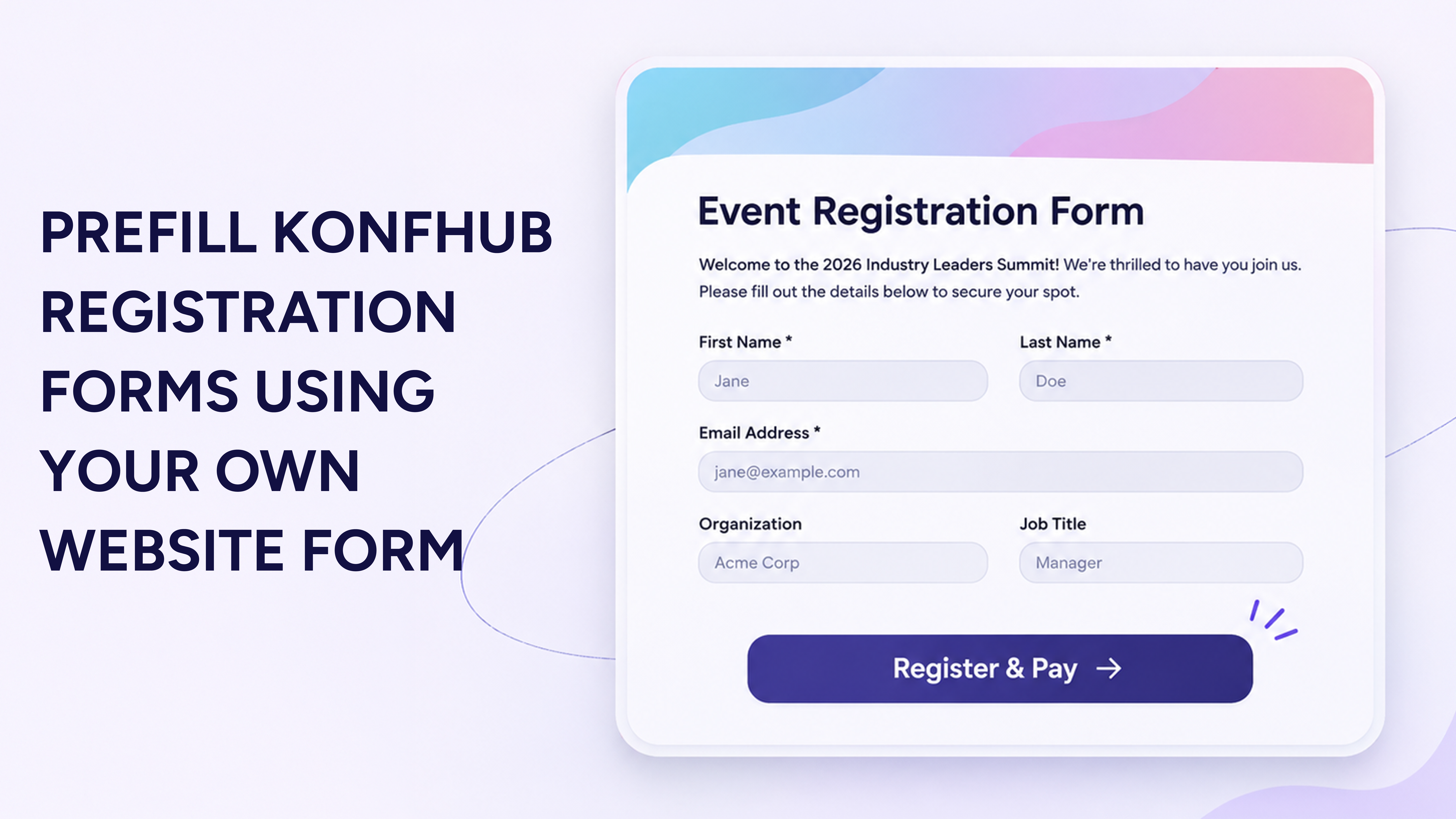
- Create relevant registration forms: Ask for useful details such as company name, designation, industry, and areas of interest. Avoid asking for unnecessary information.
- Promote the event strategically: Use email campaigns, social media, industry communities, and relevant partnerships to reach your intended audience.
- Offer valuable content: Highlight speakers, product demonstrations, workshops, and sessions that address your audience's interests.
- Segment your audience: Use registration information to identify different attendee groups and plan relevant interactions.
A well-planned registration process gives you a better understanding of who is attending and helps your team prepare for meaningful conversations.
12 Event Lead Generation Strategies That Work
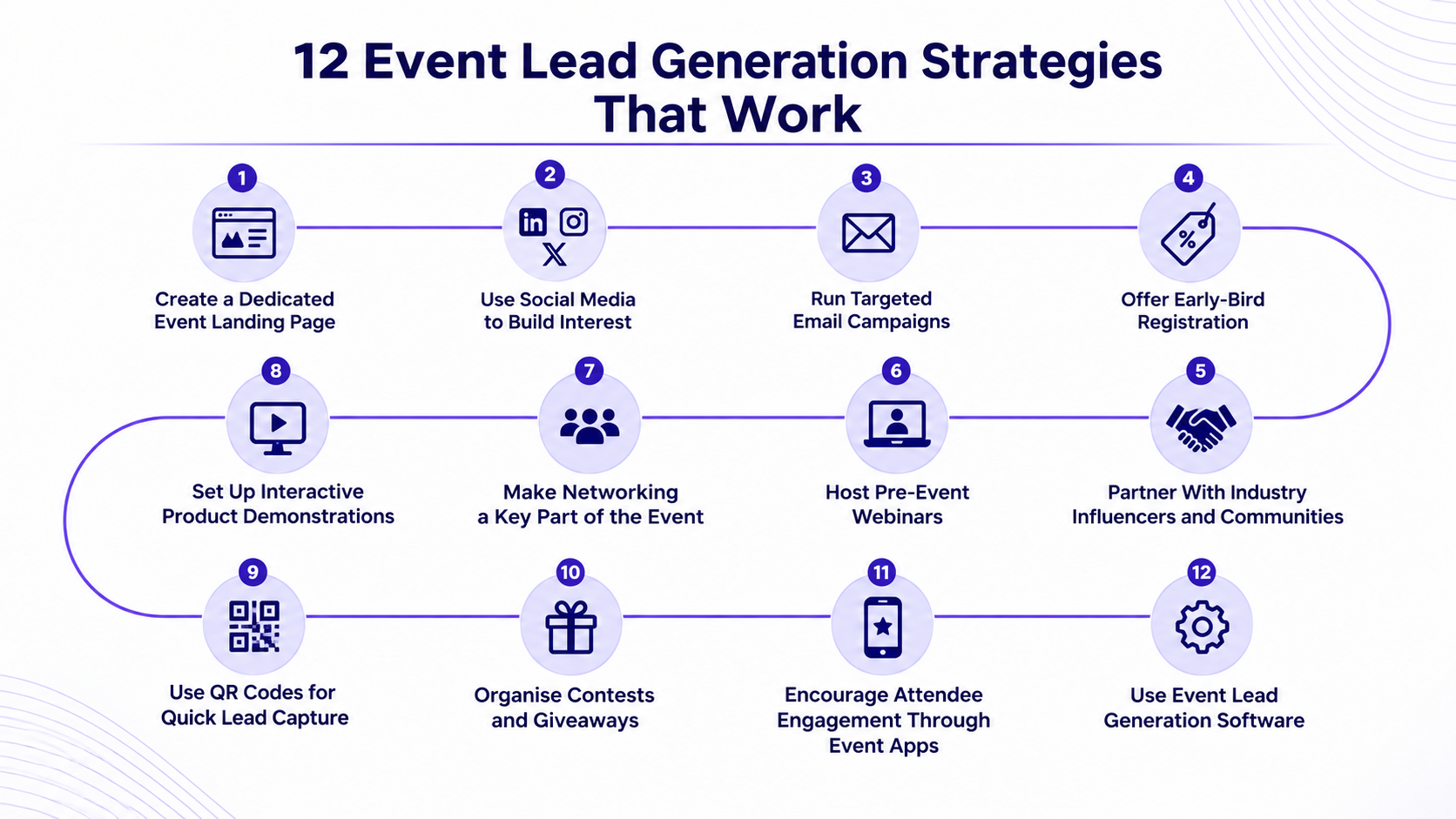
The right event lead generation ideas depend on your event format and audience. Here are 12 strategies that can help you attract and connect with potential customers.
1. Create a Dedicated Event Landing Page
A dedicated landing page gives potential attendees all the information they need in one place. Include the event agenda, speakers, key benefits, registration details, and a clear call to action. Make registration simple so interested visitors do not drop off halfway.
2. Use Social Media to Build Interest
Share event announcements, speaker introductions, countdowns, behind-the-scenes content, and short videos. Encourage speakers, sponsors, and partners to share these posts with their networks to expand your reach.
3. Run Targeted Email Campaigns
Email remains a useful channel for reaching people who have already shown interest in your business. Send personalised invitations based on industry, job role, or previous interactions rather than sending the same message to everyone.
4. Offer Early-Bird Registration
Early-bird offers create a reason for people to register sooner. You can also use limited-seat workshops or exclusive sessions to attract attendees who are genuinely interested in the event.
5. Partner With Industry Influencers and Communities
Collaborate with relevant industry associations, professional communities, speakers, and influencers. Their recommendations can help you reach audiences who are more likely to be interested in your event.
6. Host Pre-Event Webinars
A short webinar or online session can introduce your event topic and give potential attendees a preview of what to expect. It also creates an opportunity to understand their interests before the main event.
7. Make Networking a Key Part of the Event
People attend business events to meet others with similar interests. Include networking sessions, one-on-one meetings, and interactive discussions that encourage attendees to connect with your team.
8. Set Up Interactive Product Demonstrations
If you are showcasing a product or service, let attendees experience it rather than simply explaining its features. Live demonstrations provide an opportunity to understand their requirements and identify potential buyers.
9. Use QR Codes for Quick Lead Capture
Place QR codes at registration desks, exhibition booths, presentation slides, and promotional materials. Attendees can scan them to access product information, fill out forms, or request a follow-up.
10. Organise Contests and Giveaways
Quizzes, product challenges, and giveaways can encourage participation. Keep the activity relevant to your business and make sure participants understand what information they are sharing and how it will be used.
11. Encourage Attendee Engagement Through Event Apps
Event apps can make it easier for attendees to explore sessions, connect with other participants, and interact with exhibitors. Networking features and attendee profiles can also help businesses identify relevant connections.
12. Use Event Lead Generation Software
Managing leads manually becomes difficult when an event attracts a large audience. Event lead generation software can help streamline registration, collect attendee information, capture leads, and organise follow-up activities.
Choose tools that fit your event requirements, whether you need registration management, QR-based lead capture, attendee networking, or reporting.
How to Capture and Qualify Leads During an Event
Generating interest is only one part of the process. You also need a reliable way to capture attendee information and determine whether a contact is worth pursuing.
Here are some event lead capture techniques to consider:
- Use digital lead capture forms: Collect contact details and relevant business information through digital forms.
- Scan attendee badges or QR codes: Reduce manual data entry by capturing attendee details through scanning.
- Record conversation details: Make short notes about the attendee's requirements, interests, and potential business needs.
- Ask qualifying questions: Understand their budget, purchasing timeline, challenges, and decision-making role.
- Assign lead priorities: Categorise leads as high, medium, or low priority based on their level of interest and buying intent.
For example, someone requesting a product demo and discussing their purchase requirements may be a stronger lead than someone who simply visits your exhibition booth.
The key is to capture enough context so your sales team knows how to approach each contact later.
How to Follow Up and Nurture Leads After an Event
Following up after an event is where many businesses lose potential opportunities. Attendees meet several exhibitors, attend multiple sessions, and interact with different brands. A delayed or generic follow-up may not leave much of an impression.
To manage event leads effectively:
- Follow up promptly: Send a thank-you email within 24–48 hours while the interaction is still fresh.
- Personalise your communication: Mention the session attended, product discussed, or specific requirement shared during the event.
- Segment your leads: Separate interested buyers, potential partners, networking contacts, and general enquiries.
- Share relevant resources: Send product brochures, case studies, demo links, or other information based on their interests.
- Plan further engagement: Add relevant contacts to appropriate email nurturing campaigns and schedule sales conversations where necessary.
Avoid sending the same promotional email to every attendee. Relevant communication is more likely to lead to meaningful conversations.
How to Measure Event Lead Generation Performance
Tracking the right metrics helps you understand whether your event lead generation strategies are delivering results.
Some important metrics include:
- Total leads generated: The overall number of contacts collected during the event.
- Qualified leads: The number of contacts that meet your target customer criteria.
- Lead conversion rate: The percentage of generated leads that move to the next stage or become customers.
- Cost per lead: The total event investment divided by the number of leads generated.
- Lead-to-customer rate: The percentage of leads that eventually become paying customers.
- Follow-up engagement: Email responses, demo bookings, meetings, and other interactions after the event.
For example, an event that generates 200 contacts but only 10 qualified leads may not perform as well as one that generates 80 contacts and 30 qualified leads.
Focus on lead quality and business outcomes rather than just the total number of contacts collected.
Conclusion
Event lead generation is not just about collecting contact details. It is about attracting the right audience, creating opportunities for meaningful interactions, and building relationships that continue even after the event ends.
From targeted promotions and interactive sessions to digital lead capture and timely follow-ups, the right strategies can make your events more valuable for your business.
With an event management platform like KonfHub, organisers can simplify event registrations, manage attendee information, enable networking, and use tools such as sponsor lead scanning to make lead collection more organised.
When you combine thoughtful planning with the right technology, every event can become an opportunity to build stronger connections and generate qualified leads.
Frequently Asked Questions (FAQs)
- What is event lead generation?
Event lead generation is the process of attracting potential customers and collecting their information through events such as conferences, trade shows, webinars, and networking sessions. It helps businesses identify interested prospects and create opportunities for future sales. - How do you generate leads at events?
You can generate leads at events through networking sessions, product demonstrations, interactive activities, QR code registrations, digital lead capture forms, and attendee engagement. Following up with interested participants after the event is equally important. - What are the best event lead generation strategies?
Some effective event lead generation strategies include targeted email campaigns, social media promotions, pre-event webinars, interactive product demonstrations, networking activities, QR-based lead capture, and personalised post-event follow-ups. The best approach depends on your event type and target audience. - How do you generate B2B leads at events?
To generate B2B leads, focus on attracting decision-makers, industry professionals, and potential business partners. Use networking sessions, one-on-one meetings, product demonstrations, industry discussions, and targeted registration forms to identify relevant prospects. - How do you qualify leads from an event?
You can qualify event leads by understanding their business requirements, purchasing interests, budget, decision-making authority, and expected buying timeline. Based on this information, categorise leads according to their potential and prioritise follow-ups. - How do you follow up with event leads?
Start by sending a personalised thank-you email within 24–48 hours of the event. Refer to your conversation, share relevant resources, and suggest a suitable next step, such as scheduling a product demo or meeting. Keep the communication relevant to each lead's interests. - How do you measure event lead generation success?
Measure event lead generation success using metrics such as total leads collected, qualified leads, lead conversion rate, cost per lead, and lead-to-customer rate. Tracking these metrics helps you understand the quality of leads generated and the overall return on your event investment.
About the author
KonfHub is an AI-powered, GDPR-compliant platform for seamless ticketing, secure attendee management, and smooth event operations. Say goodbye to complexity and hello to seamless, powerful event management!
Comments
Join the discussionNo comments yet. Be the first to comment.