Introduction
A successful event depends on more than a good venue, an interesting lineup, or well-planned activities. Behind every smooth-running event is a team of people making sure everything happens as planned. From welcoming attendees and managing registrations to coordinating speakers and handling last-minute issues, event staff play an important role in the overall experience.
However, finding the right people is only one part of the process. Organizers also need to decide how many staff members are required, assign responsibilities, and make sure everyone knows what they need to do.
This is where proper event staffing comes in. A well-planned staffing approach helps avoid confusion, reduces delays, and ensures that every part of the event is managed efficiently.
What Is Event Staffing and Why Is It Important?
Event staffing is the process of identifying, hiring, assigning, and managing the people needed to organize and run an event. Depending on the event's size and format, this may include registration executives, volunteers, security personnel, technical support teams, ushers, and event managers.
Whether you are organizing a small corporate gathering or a large international conference, having the right team in place makes a significant difference.
Here is why event staffing is important:
- Smooth event operations: Clearly assigned responsibilities help different teams work without unnecessary confusion.
- Better attendee experience: Staff members assist attendees with registrations, directions, queries, and other requirements.
- Faster problem resolution: Having dedicated people to handle different situations makes it easier to address unexpected issues.
- Better time management: When everyone understands their responsibilities, activities are less likely to get delayed.
- Improved coordination: A structured team ensures that organizers, vendors, speakers, and attendees remain connected.
In short, effective event staffing gives organizers better control over the event while allowing attendees to enjoy a hassle-free experience.
How to Determine Your Event Staffing Requirements
Before creating an event staffing plan, you need to understand how many people you actually need. Hiring too few staff members can put pressure on the existing team, while hiring too many can increase operational costs.
Here are a few factors to consider when determining your event staff requirements.
1. Consider the Event Size
The number of attendees is a good starting point. A gathering of 100 people will have very different staffing needs compared to a conference with 2,000 attendees. Consider the number of registration counters, entry points, sessions, and activity areas that need supervision.
2. Understand the Event Format
A virtual event may require technical support and moderators, while an in-person event needs registration staff, ushers, security, and on-ground coordinators. Hybrid events require a combination of both.
3. Identify Different Event Activities
List everything that needs to be managed, including registration, ticket scanning, speaker coordination, catering, networking sessions, and technical arrangements. This will help you identify the teams required for each activity.
4. Account for Peak Hours
Some parts of an event require more staff than others. Registration, opening sessions, lunch breaks, and closing activities can get particularly busy. Plan additional support during these periods.
5. Set a Staffing Budget
Determine how much you can spend on hiring professionals, temporary staff, and volunteers. This will help you decide which roles need experienced professionals and where volunteers can be assigned.
Key Event Staff Roles and Responsibilities
Once you understand your staffing requirements, the next step is assigning the right people to the right roles. While the team structure may vary depending on the event, some event staff roles are common across most events.
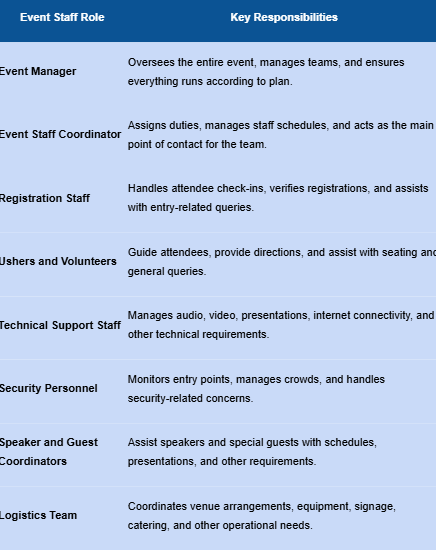
It is important to communicate event staff responsibilities clearly before the event. For example, registration staff should know how to handle attendees who cannot find their tickets, while technical teams should be prepared to resolve presentation or connectivity issues.
When responsibilities are clearly defined, teams can focus on their assigned tasks instead of trying to figure out who should handle a particular situation.
How to Create an Effective Event Staffing Plan
An event staffing plan outlines the people required, their responsibilities, work schedules, and reporting structure. It acts as a reference for the entire team before and during the event.
Follow these steps to create one:
1. List All Staffing Requirements
Start by preparing a list of every activity that requires staff support. Divide these activities into categories such as registration, operations, security, logistics, and technical support.
2. Assign Roles and Responsibilities
Identify who will be responsible for each activity. Avoid assigning multiple people to the same task without defining who is ultimately accountable.
3. Create Staff Schedules
Prepare shifts based on event timings. Include reporting times, breaks, session schedules, and closing responsibilities. Make sure there is enough coverage during busy periods.
4. Share Contact Information
Create a staff contact list with names, phone numbers, assigned roles, and team leads. This makes communication easier when something needs immediate attention.
5. Conduct a Staff Briefing
Before the event, organize a briefing to explain the event schedule, venue layout, responsibilities, emergency procedures, and escalation process.
6. Keep a Backup Plan
Staff members may arrive late, become unavailable, or need assistance during the event. Keep backup resources available so that essential activities are not affected.
A simple event staffing checklist can help organizers track whether all arrangements are in place.
Event Staffing Checklist:
- Finalize the number of staff members required.
- Assign roles and responsibilities.
- Confirm staff availability and attendance.
- Prepare shift schedules and break timings.
- Share staff contact details.
- Conduct a pre-event briefing.
- Arrange backup staff.
- Share emergency and escalation procedures.
How to Manage and Coordinate Staff During an Event
Creating a staffing plan is just the beginning. Organizers also need to ensure that the team works together effectively once the event begins.
Here are a few ways to improve event staff management:
- Have a central point of contact: Assign an event staff coordinator who can communicate updates, address concerns, and coordinate between teams.
- Use clear communication channels: Create dedicated WhatsApp groups or communication channels for different teams to share updates quickly.
- Conduct regular check-ins: Check whether staff members are at their assigned locations and whether they need additional support.
- Manage breaks and shift changes: Ensure that important areas are never left unattended during staff breaks.
- Be prepared for unexpected situations: Have a clear process for handling medical emergencies, technical failures, crowd management, and other last-minute issues.
For larger events, organizers can also consider working with an event staffing agency to source trained professionals, especially when temporary staff are needed at short notice.
How Event Technology Can Support Event Staff Management
Managing a large team manually can become difficult, particularly when multiple activities are happening at the same time. Event technology can simplify several operational tasks and reduce the workload on staff members.
Here are a few ways technology can help:
1. Faster Registration and Check-ins
An event check-in app allows staff to scan attendee tickets and verify registrations quickly. This reduces manual verification and helps manage long queues at entry points.
2. Centralized Attendee Information
Event management platforms allow organizers to access registration details, attendee information, and ticket records from one place. This makes it easier for support teams to resolve attendee queries.
3. Better Team Coordination
Digital schedules, event agendas, and shared information help staff stay updated about session timings, speaker details, and venue activities.
4. Real-Time Event Updates
When event schedules or venue arrangements change, organizers can share updates with relevant teams instead of relying on multiple individual conversations.
Platforms like KonfHub help organizers manage registrations, ticketing, attendee data, and event check-ins from a single platform. Features such as the check-in app can make entry management easier for on-ground teams, allowing staff to spend less time on manual tasks and more time assisting attendees.
Conclusion
Event staffing is not simply about hiring enough people to manage an event. It is about building a team where everyone understands their role, knows what is expected of them, and has the resources to do their job effectively.
A well-defined event staffing strategy helps organizers avoid operational gaps, manage unexpected situations, and deliver a better attendee experience. By identifying staffing requirements early, assigning clear responsibilities, preparing schedules, and using the right event technology, you can make event operations much easier to manage.
The goal is simple: have the right people in the right roles, with everyone working towards the same event objectives.
Frequently Asked Questions (FAQs)
- What is event staffing?
Event staffing is the process of hiring, assigning, and managing people responsible for different activities during an event, such as registration, guest assistance, security, logistics, and technical support. - How do you determine event staffing requirements?
Event staffing requirements depend on the event size, format, number of attendees, venue, activities, and budget. Organizers should identify all tasks that need support and assign enough staff to manage them efficiently. - What are the most common event staff roles?
Common event staff roles include event managers, registration executives, ushers, volunteers, security personnel, technical support staff, logistics coordinators, and speaker coordinators. - How do you create an event staffing plan?
To create an event staffing plan, identify the tasks that need support, determine the number of staff required, assign roles, prepare shift schedules, share contact details, and conduct a pre-event briefing. - What is the difference between event staffing and event staff management?
Event staffing focuses on identifying and hiring the people needed for an event, while event staff management involves coordinating their activities, monitoring performance, managing schedules, and ensuring smooth operations. - Should event organizers hire an event staffing agency?
An event staffing agency can be useful when organizers need trained professionals, temporary staff, or additional support for large events. It can also reduce the time spent on recruitment and staff coordination. - How can technology improve event staff management?
Event technology can simplify registration, ticket scanning, attendee data management, communication, and scheduling. Tools such as event check-in apps also help staff manage attendee entry faster and reduce manual work.
About the author
KonfHub is an AI-powered, GDPR-compliant platform for seamless ticketing, secure attendee management, and smooth event operations. Say goodbye to complexity and hello to seamless, powerful event management!
Comments
Join the discussionNo comments yet. Be the first to comment.