Most B2B teams think of demand generation as something that starts when an event is announced. Campaigns go live, ads drive traffic, emails reach prospects, and landing pages are optimized to generate registrations. But there is a critical piece of the B2B event marketing journey that often gets treated as an operational task: registration.
In reality, event registration is one of the earliest points where demand becomes measurable. The way you structure your registration page, ticket types, forms, and communication can reveal who is interested, what they care about, and how much intent they have. A simple registration can signal curiosity, while an approval-based ticket, session selection, or group registration can provide much stronger context about a prospect's needs and level of commitment.
This makes B2B event registration more than a way to collect attendee details. Done well, it becomes a qualification and segmentation layer that feeds your demand generation strategy before the event even begins.
The challenge is finding the right balance. Ask for too much information and registration friction can reduce conversions. Ask too little and your sales and marketing teams may have limited context for meaningful follow-up.
In this guide, we'll explore how to turn event registration into a demand generation engine, from capturing better intent signals and designing smarter registration forms to improving pre-event engagement, expanding organic reach, and generating actionable data for post-event follow-up.
Registration is already part of your demand engine
Every registration represents a decision, not just an action. Someone chose to trade attention, time, and often personal or professional information in exchange for access. That trade-off is one of the cleanest intent signals you’ll ever get.
The mistake is assuming all registrations signal the same thing.
Someone who registers through an open, one-field form after seeing a LinkedIn post is expressing curiosity. Someone who completes an approval-based registration, selects a role, chooses sessions, or registers multiple team members is signaling commitment. The difference matters, but only if your registration setup allows you to see it.
Demand generation doesn’t begin with post-event nurture. It begins with how clearly you can interpret why someone registered in the first place.
The registration page is a filter, whether you design it that way or not
Most registration pages are treated like gates: open them, let people through, count the volume. In reality, they function more like filters. The way tickets are structured, priced, restricted, or approved quietly shapes who ends up on the other side.
Open registration works when the goal is reach. It breaks down when the goal is relevance.
Approval-based tickets, hidden ticket types, or access codes aren’t about exclusivity for its own sake. They’re about intent alignment. When someone has to request access, enter a code, or meet a criterion, you gain context. You learn who is willing to invest effort, who sees value, and who likely belongs in follow-up conversations later.
This is where registration stops being a conversion surface and becomes a qualification layer.
Platforms like Konfhub support approval-based and hidden tickets for this exact reason, but the underlying idea is tool-agnostic. The moment you stop treating all attendees as interchangeable, your registration page has to reflect that reality.
The data you collect determines the quality of demand you can act on
There’s a persistent tension in registration design: ask too much and people drop off; ask too little and you’re left with unusable data. The solution isn’t choosing one side - it’s designing forms that adapt.
Conditional logic is not a UX trick. It’s a data discipline.
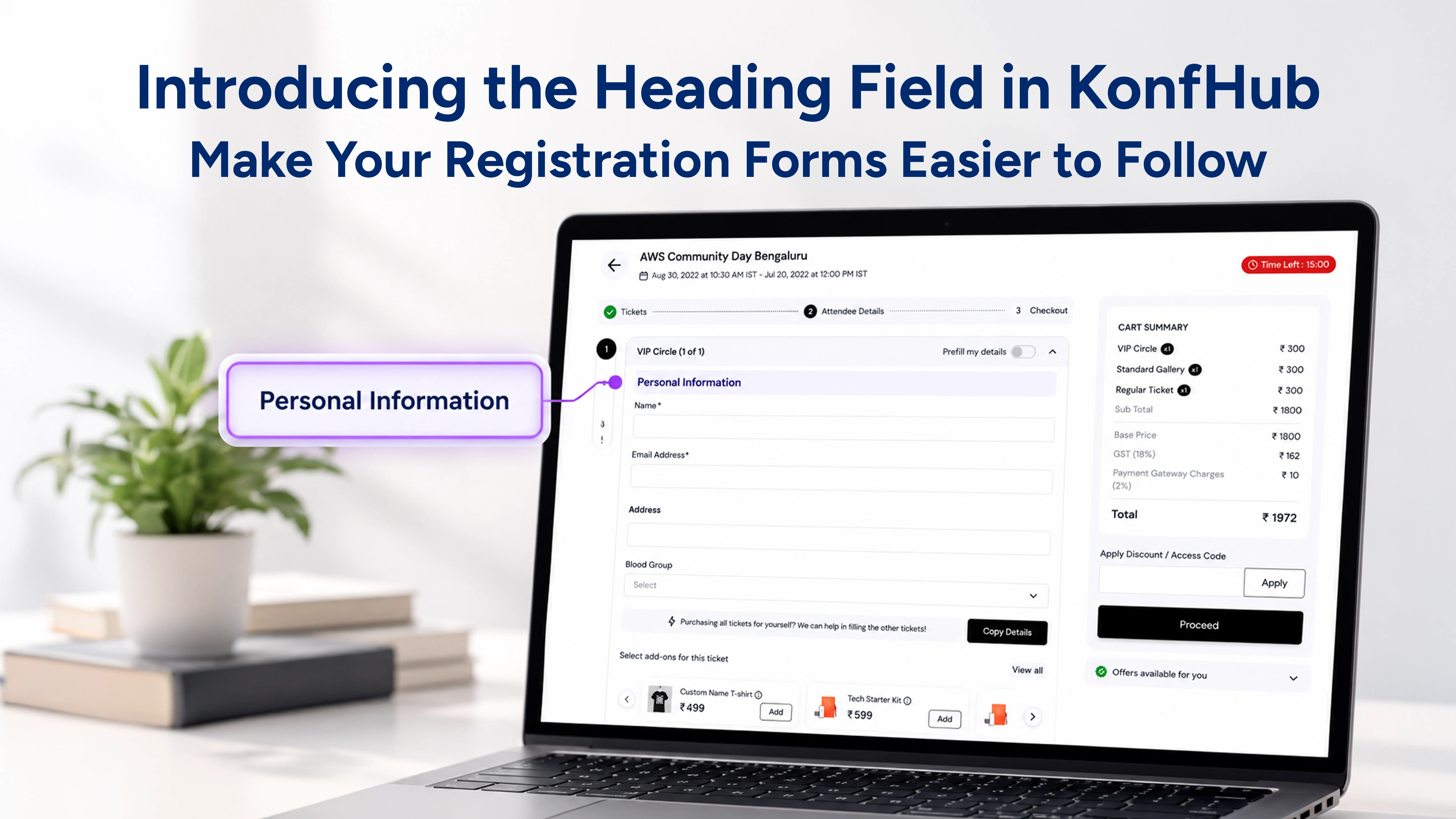
A founder registering for a closed-door roundtable doesn’t need the same questions as a student attending a public conference. A sponsor, a speaker, and an exhibitor should never be funneled through identical forms. When they are, the data that comes out looks uniform but behaves inconsistently downstream.
Good registration design asks fewer questions up front, but ensures that every question asked has a clear purpose later - segmentation, routing, personalization, or follow-up.
Konfhub’s conditional registration forms and advanced filters support this pattern, but the point stands regardless of platform: if you don’t know how a field will be used after the event, it probably shouldn’t be there.
Registration is the first moment of pre-event engagement
Once someone registers, the event has already started for them.
This is where many teams go quiet. A confirmation email is sent, maybe a calendar invite follows, and then nothing happens until the event begins. From a demand perspective, that’s wasted surface area.
Pre-event communication does more than reduce no-shows. It shapes expectations, primes intent, and deepens the relationship before a single session runs.
Clear confirmations, agenda highlights, exhibitor previews, and reminders aren’t just operational updates. They are demand signals in reverse - ways for you to observe what people engage with, what they ignore, and what they return to.
In some regions, WhatsApp communication dramatically outperforms email for this phase. In others, email remains dominant. The channel matters less than the consistency. Konfhub supports both, but the real value comes from treating communication as a continuation of registration, not a separate workflow.
Registration mechanics can expand reach without paid spend
Not all demand needs to be manufactured. Some of it can be structurally enabled.
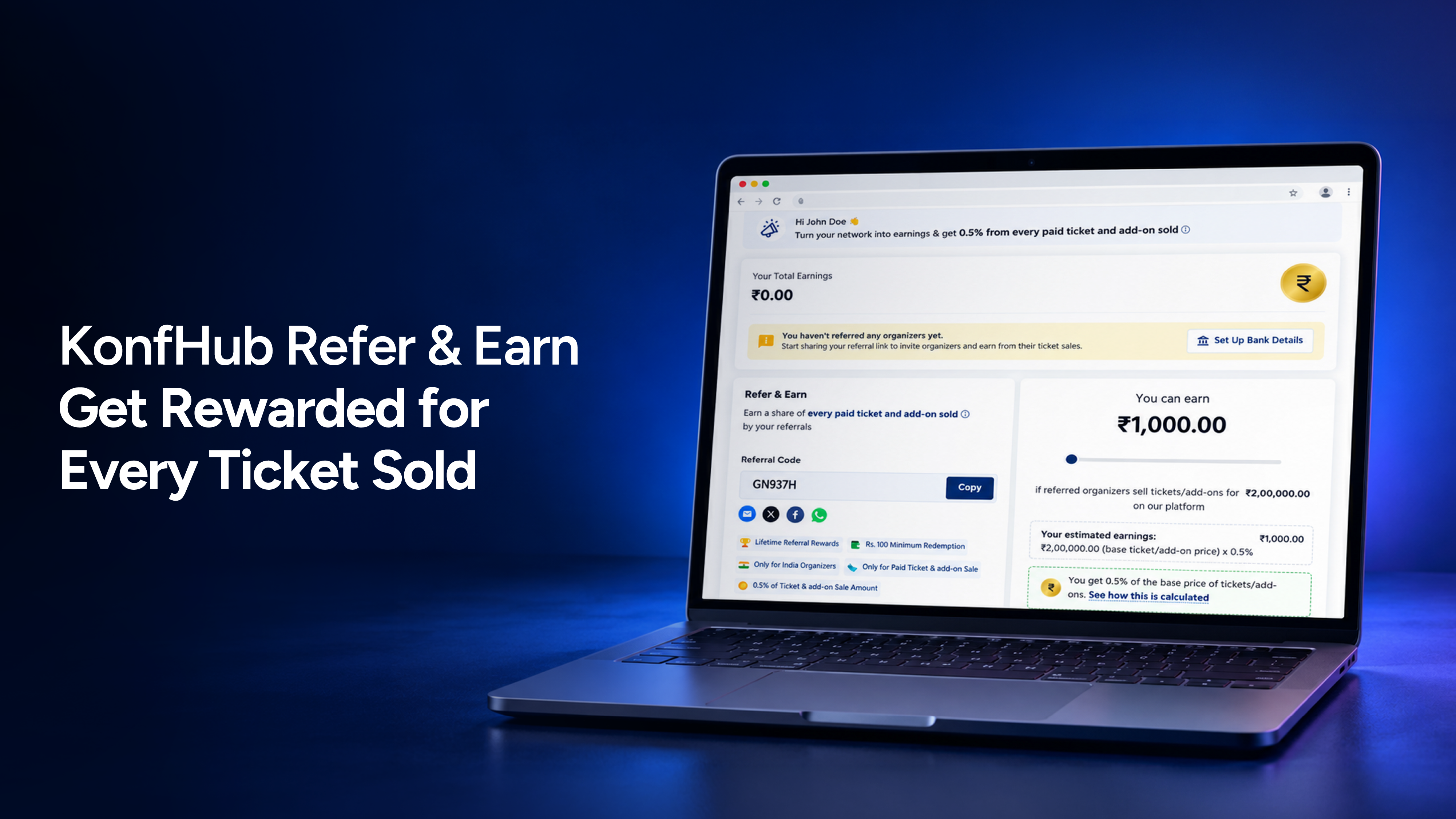
Group registrations, team discounts, and referral-based access don’t just increase numbers. They change the composition of the audience. When someone brings colleagues, you move from individual interest to organizational relevance.
This is particularly effective for B2B events where buying decisions are rarely made alone. A single registration might represent curiosity. A group registration often represents internal validation.
Access codes and group pricing allow this to happen without turning the registration page into a promotional mess. They keep the surface clean while still enabling organic expansion.
Registration-linked content creates secondary demand surfaces
An event doesn’t only generate demand among people who attend live.
Session previews, speaker interviews, gated agendas, and post-registration resources extend the life of the event beyond the calendar date. Registration becomes the key that unlocks value - not just access to a venue or livestream.
This matters because not every qualified lead will attend. Some will register and never show up. Others will engage with content asynchronously. If registration is designed purely as a gate to attendance, those signals are lost.
If it’s designed as a gateway to a body of content and interaction, demand can compound long after the event ends.
How to Design Event Registration for Better Lead Qualification
A registration form should not try to collect everything about an attendee. Its job is to capture the information that helps your team understand relevance, intent, and potential next steps.
Start by identifying the decisions your marketing or sales team will need to make after registration. If you want to segment attendees by company size, job function, industry, or event interest, collect only the information needed to support those segments.
You can also use registration behavior as an additional intent signal. For example:
Basic registration: Indicates initial interest in the event.
Session selection: Provides insight into specific topics or business priorities.
Approval-based registration: Can indicate stronger intent for exclusive experiences.
Group registration: May signal broader organizational interest.
Exhibitor or sponsor interactions: Can reveal commercial intent.
Networking preferences: Help identify relevant prospects and potential connections.
This approach makes event lead qualification more useful without turning the registration experience into a lengthy questionnaire.
The goal is simple: collect fewer but more meaningful data points, then connect those signals with attendee engagement throughout the event lifecycle.
Bonus Guide: Best Townscript Alternative in 2026
Demand does not end at check-in
Clean registration data pays dividends after the event, but only if it was structured intentionally upfront.
Who attended which sessions. Which exhibitors were viewed. Who downloaded what. Who brought a team. These aren’t analytics curiosities. They are the raw materials of post-event ROI.
When registration data is messy or shallow, post-event follow-up becomes generic. When it’s clean and contextual, follow-up can be precise without feeling invasive.
This is where the separation between “event ops” and “marketing” usually causes damage. Registration sits at the intersection of both. Treat it as purely operational, and demand teams inherit limitations they can’t fix later.
Where teams usually get this wrong
The most common failure mode is treating registration as a static asset. Build it once, reuse it, move on.
Events don’t work that way. Audience expectations change. Business goals shift. What mattered last quarter may not matter this one. Registration should evolve accordingly.
Another mistake is over-collecting data in the name of future usefulness. Most of that data never gets used, but it increases friction and reduces trust. Asking fewer, better questions almost always leads to better demand outcomes.
Finally, many teams design registration in isolation - separate from agenda planning, communication strategy, and post-event follow-up. That fragmentation shows up later as missed signals and weak ROI narratives.
Registration is a system, not a campaign
If events are a serious part of your growth strategy, registration deserves more respect than it usually gets.
It is the earliest point where intent becomes visible. It is the cleanest place to align access with value. It quietly determines whether demand generation later feels obvious or forced.
Tools like Konfhub can support this system - with ticketing control, conditional forms, multi-channel communication, and clean attendee management - but the leverage comes from the mindset, not the feature set.
Design registration as infrastructure, and demand generation becomes easier everywhere else.
Treat it as a form to be filled, and you’ll keep wondering why the pipeline looks thinner than the attendance numbers suggested.
Conclusion
Event registration may look like a small part of the event planning process, but it can influence almost every stage of your demand generation strategy. It determines how easily prospects can enter the event, what you learn about their interests, how you segment your audience, and how effectively your teams can follow up afterward.
The strongest B2B event registration strategies go beyond collecting names and email addresses. They use ticketing rules, registration forms, attendee preferences, group registrations, communication, and engagement data to build a clearer picture of intent.
The key is not to collect more data. It is to collect better data and connect it to meaningful actions.
When registration is connected with pre-event communication, attendee engagement, session participation, networking, and post-event follow-up, it becomes an important part of your B2B demand generation strategy rather than a simple administrative workflow.
Platforms such as KonfHub can help organizers bring these processes together through flexible ticketing, conditional registration forms, attendee management, communication tools, and event engagement capabilities.
Ultimately, the registration form is only the starting point. When designed as part of a broader system, it can help turn event interest into qualified demand, stronger relationships, and measurable business opportunities.
FAQs
How does event registration support B2B demand generation?
Event registration provides an early opportunity to identify attendee intent, collect relevant prospect information, and segment audiences. When registration data is connected with engagement and follow-up activities, it can become an important input for a B2B demand generation strategy.
What information should B2B events collect during registration?
B2B event registration should focus on information that has a clear purpose, such as job role, company, industry, areas of interest, session preferences, or networking goals. Avoid collecting unnecessary information that creates registration friction without improving lead qualification.
Can event registration help qualify B2B leads?
Yes. Event lead qualification can begin during registration. Ticket types, approval requirements, session selections, company information, and group registrations can provide useful signals about an attendee's relevance and level of interest.
How can registration forms improve event lead generation?
Well-designed event registration forms can capture relevant information while minimizing friction. Conditional fields, audience-specific questions, and appropriate ticketing workflows allow organizers to collect better data without overwhelming attendees.
What are the best ways to capture attendee intent during registration?
Attendee intent can be captured through session preferences, ticket selection, approval-based registration, networking interests, group registration, and other relevant actions. These signals can help marketing teams understand what attendees are looking for before the event starts.
How does pre-event communication contribute to B2B event marketing?
Pre-event communication keeps attendees informed while creating additional engagement opportunities. Agenda updates, session recommendations, speaker information, reminders, and relevant content can help maintain interest and provide additional signals that support B2B event marketing.
How can event registration data improve post-event follow-up?
Structured registration data can help teams segment attendees and personalize follow-up based on their interests, sessions, participation, or other relevant interactions. This makes post-event communication more targeted than sending the same message to every attendee.
What makes a good B2B event registration strategy?
A strong B2B event registration strategy balances conversion and qualification. It should make registration easy while collecting the specific information needed for segmentation, lead qualification, personalization, and follow-up. Registration should also connect with the broader event marketing and engagement workflow rather than operate as an isolated process.
About the author
KonfHub is an AI-powered, GDPR-compliant platform for seamless ticketing, secure attendee management, and smooth event operations. Say goodbye to complexity and hello to seamless, powerful event management!
Comments
Join the discussionNo comments yet. Be the first to comment.