Exhibitor Management: A Complete Guide for Event Organizers

Successful events aren't measured only by attendee registrations or ticket sales. One of the strongest indicators of long-term growth is whether your exhibitors return year after year.
Effective exhibitor management goes far beyond assigning booth spaces. It involves creating an experience that helps exhibitors achieve their goals, generate quality leads, and see measurable value from participating in your event.
In conferences, trade shows, and expos, exhibitors are more than sponsors or revenue contributors. They add credibility, attract attendees, and play a vital role in the event's success.
When exhibitors have a positive experience, they're more likely to renew their participation, recommend your event to others, and become long-term partners. On the other hand, poor exhibitor management can lead to frustration, lower retention, and lost revenue.
This guide covers the best practices for exhibitor management, from onboarding and communication to lead capture, exhibitor portals, and post-event reporting. Whether you're organizing your first expo or managing a large conference, these strategies will help improve exhibitor experience, increase exhibitor retention, and build stronger, more successful events.
It Starts Before Contracts Are Signed
Most exhibitor dissatisfaction doesn’t begin onsite. It begins when expectations are misaligned.
An early-stage company might care about exposure and brand recall. A late-stage SaaS company might care about pipeline velocity and booked demos. A hiring-focused firm might care about talent conversations.
If you treat every exhibitor the same, you unintentionally fail all of them.
The strongest organizers have real conversations early on. They ask:
What does success look like for you at this event?
Are you measuring MQLs, booked meetings, or awareness?
Who are you hoping to meet?
When you understand that, you can guide booth placement, suggest networking formats, and recommend visibility upgrades that actually match their goals.
Without that alignment, everything that follows becomes generic.

Pre-Event Chaos Is the Silent Killer
Here’s what exhibitors often experience before large events:
Five email threads, three versions of the floor plan, asset requests in different formats, deadline reminders scattered across inboxes.
It feels disorganized. And when preparation feels messy, exhibitors assume the event itself might be messy too.
At a small scale, this is manageable manually. Barely, but still manageable.
Hit 50+ booths, and this starts to unravel very quickly. You rack up operational debt, and your exhibitors are left grumbling about bad event management.
This is where structured exhibitor systems start to matter.
Not just a “nice digital upgrade” - think structured coordination that gives exhibitors a friction-less experience.
When exhibitors can log into a centralized workspace to:
Upload logos and banners
Update their public exhibitor profile
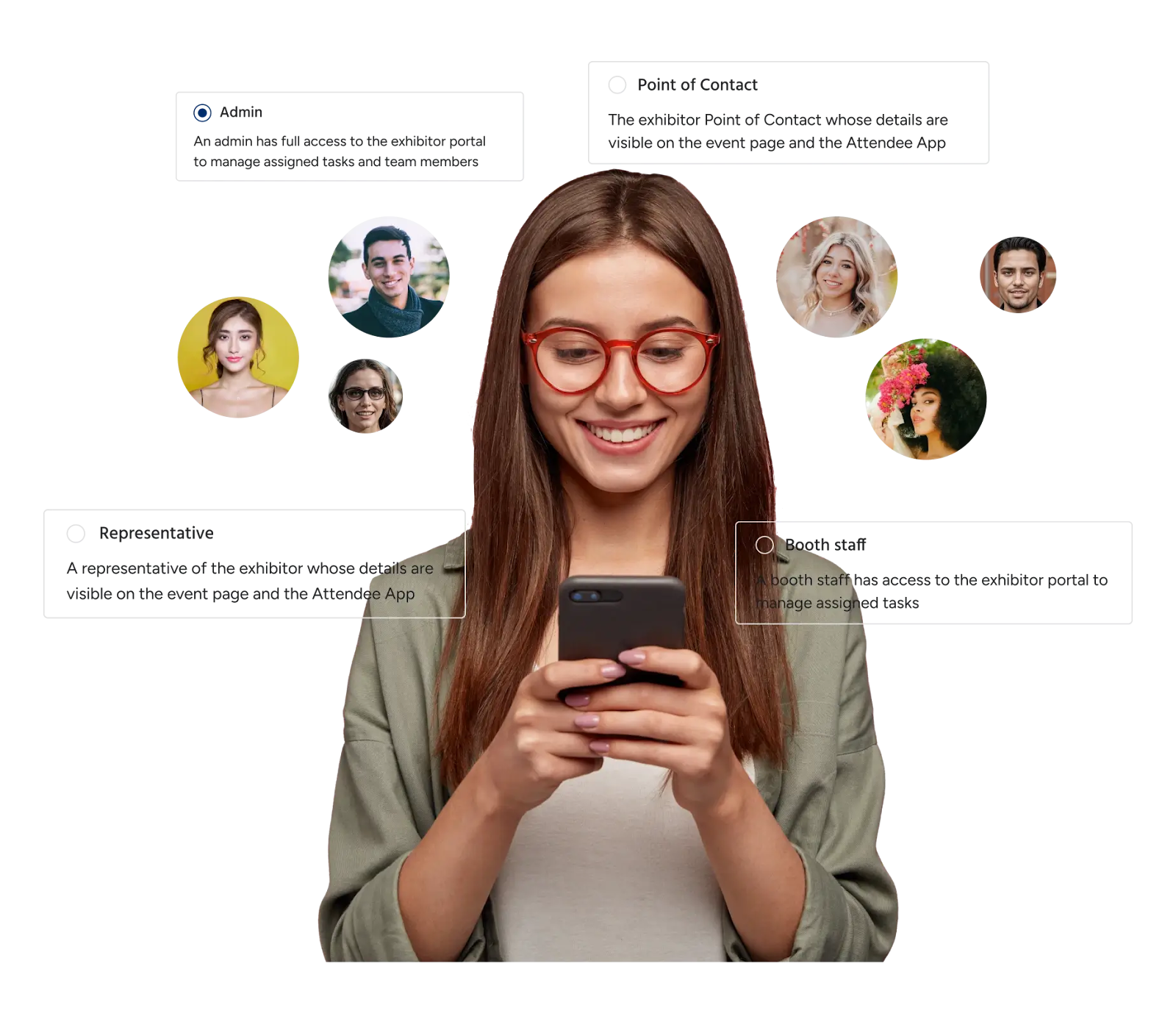
Assign their booth team
Register their allocated tickets themselves
Track submission deadlines
Access floor plans and brand assets
Upload marketing collaterals (like brochures) and immediately get them accessible to visitors from their devices
…you remove a huge layer of friction.
From the organizer side, visibility improves instantly. You know who has submitted what. You know who is late. You’re not chasing blindly.
This is exactly the type of operational clarity exhibitor portals are designed for.
Not flashy features, just fewer mistakes.
Booth Placement Is Politics, Whether You Admit It or Not
Floor plans are emotional documents.
Every exhibitor believes their category deserves visibility and wants the traffic to match up to their expectations.
The mistake is treating booth allocation like a simple map exercise.
You need to choreograph attendee flow strategically. Start by asking:
Where are your traffic magnets?
Where will coffee queues form?
Which keynote hall empties into which corridor?
Are you clustering competitors accidentally?
Smart organizers distribute attention. They balance anchor brands with emerging players and avoid isolating first-time exhibitors in dead zones.
Increasingly, the physical floor plan is only half the story. The digital layer matters too.
If your event app allows attendees to browse exhibitor profiles in advance, shortlist booths, and even pre-book meetings, traffic becomes more intentional.
Bonus Read: 10 Types of Business Events That Drive ROI and Leads
Lead Capture Is Where ROI Becomes Real
Walk any expo floor and you’ll still see the occasional fishbowl full of business cards.
In 2026, this doesn’t work the same anymore, and you need to do something about it. If exhibitors cannot walk away with structured, exportable, organized lead data, they struggle to justify spending on your events internally.
Modern exhibitors expect:
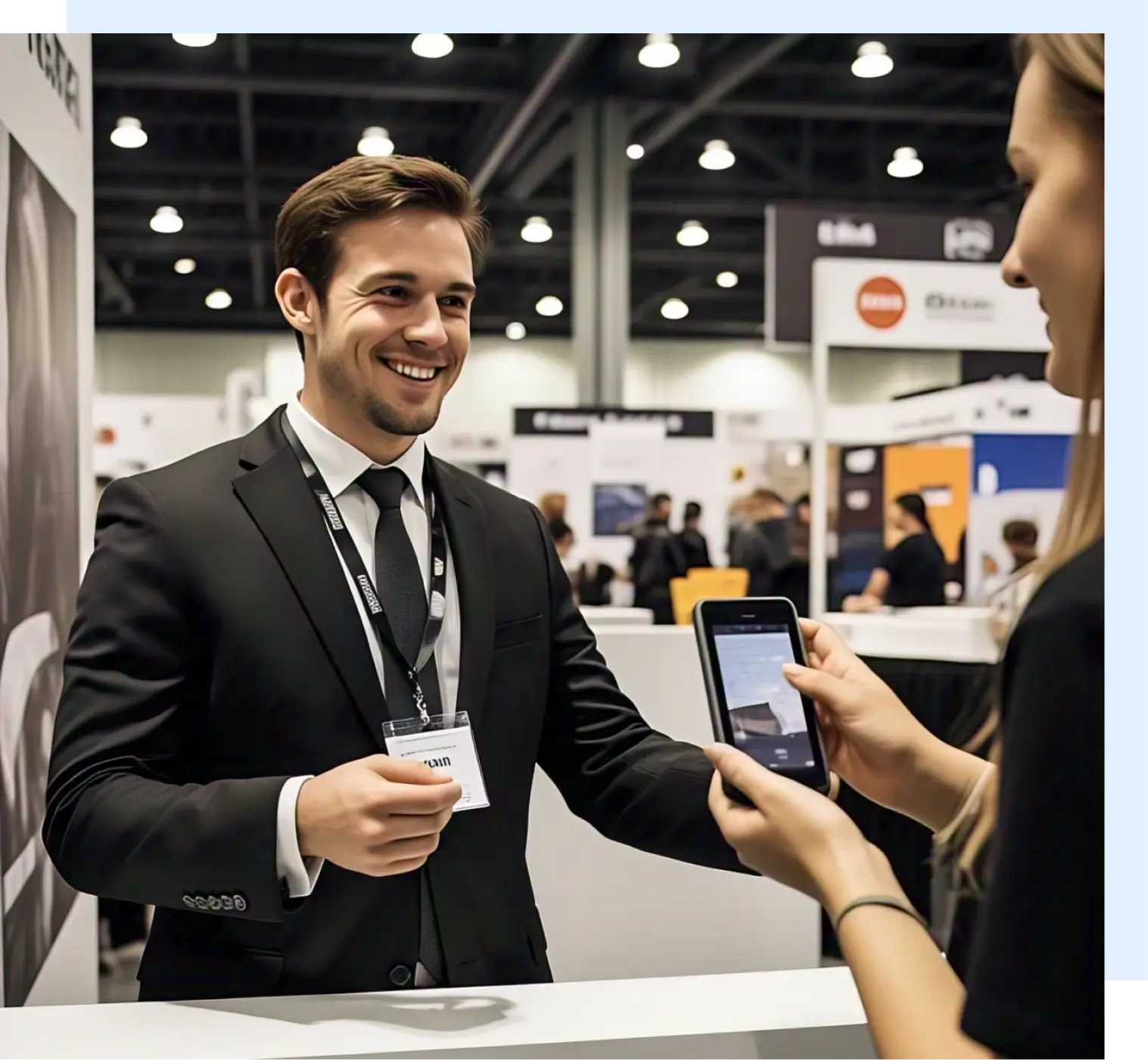
QR-based scanning
Consolidated lead lists across booth staff
Clear tagging or qualification options
Post-event download capability
Some level of analytics
When lead capture tools are integrated into the event ecosystem rather than left to third-party apps, the experience improves for everyone.
For exhibitors, restarting conversations and building follow-ups become seamless. For organizers, you elevate your event from “space rental” to “growth platform.”
Systems like structured exhibitor portals increasingly bundle lead capture directly into the booth experience. Leads collected by different team members automatically consolidate, replacing the traditional reconciliation chaos after the event.
The Onsite Experience Is Still Human
Technology supports exhibitors. But it cannot replace the human touch in hospitality.
Days after the event, exhibitors will still be talking about how they felt at your event. Here’s a few things we’ve heard over the years:
Setting up the booth took too long
Wi-Fi was great on day 1. Not sure what happened on days 2 and 3.
I had a problem getting badges for my investors when they got to the conference. Luckily the support staff was super responsive.
You can have the best digital system in the world, but if the physical start to the event is chaotic, the impression sticks.
At the same time, this is where experience design shows up.
Encouraging exhibitors to think beyond static booths, getting them to build demos, use interactive screens, think about experiential elements, improves engagement. It gives them the feeling that you are here to ensure they are able to generate returns by exhibiting at your events.
You go from being someone offering space at a conference to a partner that can trusted with your ROI.
After the Event: The Moment Most Organizers Get Wrong
When the lights go off, the real evaluation begins. Exhibitors go back to their teams and answer a simple question: “Was it worth it?”
If you leave them to answer that question alone, you weaken your position.
Strong organizers provide data that helps them understand how the event really went: Share attendance numbers, demographic breakdowns, lead capture summaries, engagement analytics and overviews.
They collect structured feedback, identify improvement areas and communicate next steps and potential points of improvement early.
This is also where systems matter again. When exhibitor interactions, listings, and leads are centralized, reporting becomes cleaner.
Without structured data, post-event reporting becomes manual guesswork. And guesswork rarely builds long-term loyalty.
The Bigger Picture: Exhibitor Retention Is a Growth Lever
There’s a reason seasoned event operators obsess over exhibitor retention rates.
Acquiring new exhibitors every year is expensive. Retaining them compounds revenue predictably.
So what actually drives retention?
Clear preparation processes
Clear visibility before the event
Clear lead capture during the event
Clear reporting after the event
When exhibitors feel supported across the entire lifecycle, your event starts to be seen less as a gamble, and more as infrastructure for their business’s GTM strategy.
That shift is what separates events that survive from events that scale.
Where Structure Meets Experience
If you’re running large expos, trade fairs, or multi-track conferences, exhibitor management eventually outgrows email and spreadsheets.
A centralized event management system helps streamline:
Exhibitor listings and public profiles
Team management with defined roles
Task workflows and automated reminders
Shared asset libraries
Integrated lead capture
White-labeled exhibitor environments
Exhibitor self-uploaded and managed marketing collaterals
and more!
KonfHub’s Exhibitor Portal is one example of how this structure can be implemented inside a broader event ecosystem.
If you’re evaluating how to reduce exhibitor friction and improve ROI visibility, it’s worth studying how structured portals operate.
Even if you don’t switch tools, the lesson remains the same:
Exhibitor satisfaction is carefully engineered through a system that they can rely on for robustness, consistency and transparency.
Build an experience that layers technology with a discrete, dependable human touch, and you’ll be giving your exhibitors more reasons to come back to your event in upcoming editions.
FAQs
What is exhibitor management?
Exhibitor management is the process of planning, coordinating, and supporting exhibitors before, during, and after an event. It includes exhibitor onboarding, booth allocation, communication, asset collection, lead capture, reporting, and post-event follow-up to ensure a smooth experience and improve exhibitor satisfaction.
Why is exhibitor management important for conferences and trade shows?
Effective exhibitor management helps organizers improve exhibitor experience, increase exhibitor retention, and deliver better event ROI. When exhibitors receive quality leads, clear communication, and efficient event support, they're more likely to return for future conferences, expos, and trade shows.
What features should an exhibitor management platform include?
A good exhibitor management platform should include exhibitor registration, self-service exhibitor portals, booth management, floor plan management, QR-based lead capture, team management, asset uploads, attendee networking, analytics, and post-event reporting to simplify event operations.
How can organizers improve exhibitor experience at events?
Organizers can improve exhibitor experience by providing clear communication, centralized exhibitor portals, easy booth setup, digital floor plans, lead capture tools, networking opportunities, and detailed post-event analytics. Reducing manual coordination helps exhibitors focus on generating business rather than managing logistics.
How does exhibitor management improve event ROI?
Strong exhibitor management improves event ROI by helping exhibitors generate qualified leads, increasing sponsor satisfaction, reducing operational inefficiencies, and encouraging exhibitors to renew their participation. Higher exhibitor retention also creates more predictable event revenue over time.
How does KonfHub simplify exhibitor management?
KonfHub streamlines exhibitor management with a dedicated exhibitor portal that allows exhibitors to manage booth details, upload marketing assets, assign team members, access event resources, and capture leads using QR codes. Combined with attendee engagement and event management tools, it helps organizers deliver a seamless exhibitor experience while improving operational efficiency.