An early bird registration strategy encourages people to sign up for an event before a specific deadline by offering a lower ticket price or an additional benefit.
When planned well, it can help organizers generate early revenue, estimate attendance, and make better decisions about event costs and promotion.
However, offering a discount alone does not guarantee more registrations. The offer needs to match your audience, event budget, ticket value, and registration timeline.
In this guide, you'll learn how to plan an early bird registration strategy, choose the right discount and deadline, promote the offer, avoid common pricing mistakes, and measure whether your campaign is working.
What is Early Bird Registration?
Early Bird registration is a strategic approach employed by event organizers to incentivize attendees to register for an event well in advance of its scheduled date. It allows attendees to secure their spot at the event at a discounted rate or with added benefits.
This concept is akin to offering a special rate for those who are swift to commit, encouraging early engagement and generating initial excitement.
It's a win-win situation; attendees get a better deal, and organizers get a clearer picture of their anticipated turnout.
How to Create an Early Bird Registration Strategy in 6 Steps
A successful early bird registration strategy needs more than a discounted ticket. You need a clear offer, a realistic deadline, and a plan to promote and measure registrations.
1. Set a clear registration goal
Decide how many early registrations you want before launching the offer. Consider your event capacity, expected attendance, budget, and how much advance revenue would help with planning. For example, if your goal is to secure 100 registrations during the early bird period, use that target to plan your promotional activities and review progress.
2. Choose an early bird ticket price
Start by calculating your event costs, expected ticket sales, payment processing fees, and other expenses. Then compare your proposed price with similar events and the value your event provides. For example, if your regular ticket costs ₹3,000, you could test an early bird price of ₹2,500. This is an illustrative 16.7% discount, not a universal recommendation. Check whether the lower price still supports your event budget.
3. Set a deadline or ticket limit
Decide whether the offer will end on a specific date, after a set number of tickets are sold, or when either condition is reached. A deadline makes the offer easier to communicate, while a ticket limit helps control how many registrations receive the discounted price. Use genuine limits and communicate them clearly.
4. Give early registrants a clear reason to book
Explain what attendees receive for registering early. This could include a lower price, access to a workshop, a networking session, or another benefit that is relevant to your event. Make the value clear on the event page so people can understand why registering before the deadline is worthwhile.
5. Promote the offer through relevant channels
Announce the offer through your email list, social media, speakers, sponsors, event partners, and relevant professional communities. Include the price, deadline, benefits, and a direct registration link. Plan reminders before the deadline rather than sending the same message repeatedly. Explain the event's value in each communication.
6. Track registrations and prepare the next pricing stage
Monitor the number of early bird tickets sold, the conversion rate of your registration page, revenue, and the performance of each promotional channel. When the offer ends, move to the next announced price tier. Review the results to understand which channels attracted registrations and whether the offer supported your financial goals.
Commonly used industries and events
Early Bird registration finds its footing in a diverse range of industries and events, amplifying its effectiveness across various platforms. Here are some examples:

- Conferences and seminars: Industry-specific conferences, workshops, and seminars often use Early Bird registration to attract professionals eager to network, learn, and gain insights from experts.
- Music concerts and festivals: From large-scale music festivals to intimate concerts, Early Bird registration offers music enthusiasts the chance to secure tickets at a reduced rate before they go on general sale.
- Sporting events: Major sporting events, such as marathons, tournaments, and championships, leverage Early Bird registration to gauge participant interest and build excitement.
- Professional training and workshops: Training programs, skill-building workshops, and certification courses use Early Bird offers to entice individuals seeking to enhance their expertise.
- Trade shows and expos: Industries and businesses showcase their products and services at trade shows and expos, using Early Bird registration to attract potential clients, partners, and investors.
- Cultural and arts events: Theatrical productions, art exhibitions, and cultural events use Early Bird offers to engage patrons and build a dedicated audience.
Also Read: How to Price Event Tickets: Event Ticket Pricing Strategy
Types of Early Bird Registration
Event organizers can structure early bird offers in several ways, depending on their audience, budget, and registration goals.
Time-limited early bird pricing
Tickets are available at a discounted price until a published deadline. This works well when you want to encourage people to register before a particular date.
Limited-quantity early bird tickets
A set number of tickets are offered at the early bird price. Once those tickets sell out, the next price tier becomes available. This approach helps organizers control the number of discounted registrations.
Tiered early bird pricing
Ticket prices increase in planned stages, such as early bird, standard, and late registration. Each price and its applicable dates should be communicated in advance.
Early bird packages with added benefits
Instead of reducing the price, organizers can offer benefits such as a bonus workshop, priority booking, or an additional networking opportunity. This can help preserve the standard ticket price while rewarding early commitment.
Group early bird discounts
Organizers can offer a lower per-person rate when a team or group registers together. This can be useful for conferences, training programs, and professional events where colleagues attend as a group.
Choose the format that fits your event economics and audience. Avoid offering so many ticket types that people struggle to understand which option is right for them.
Benefits of an Early Bird Registration Strategy for Organizers\
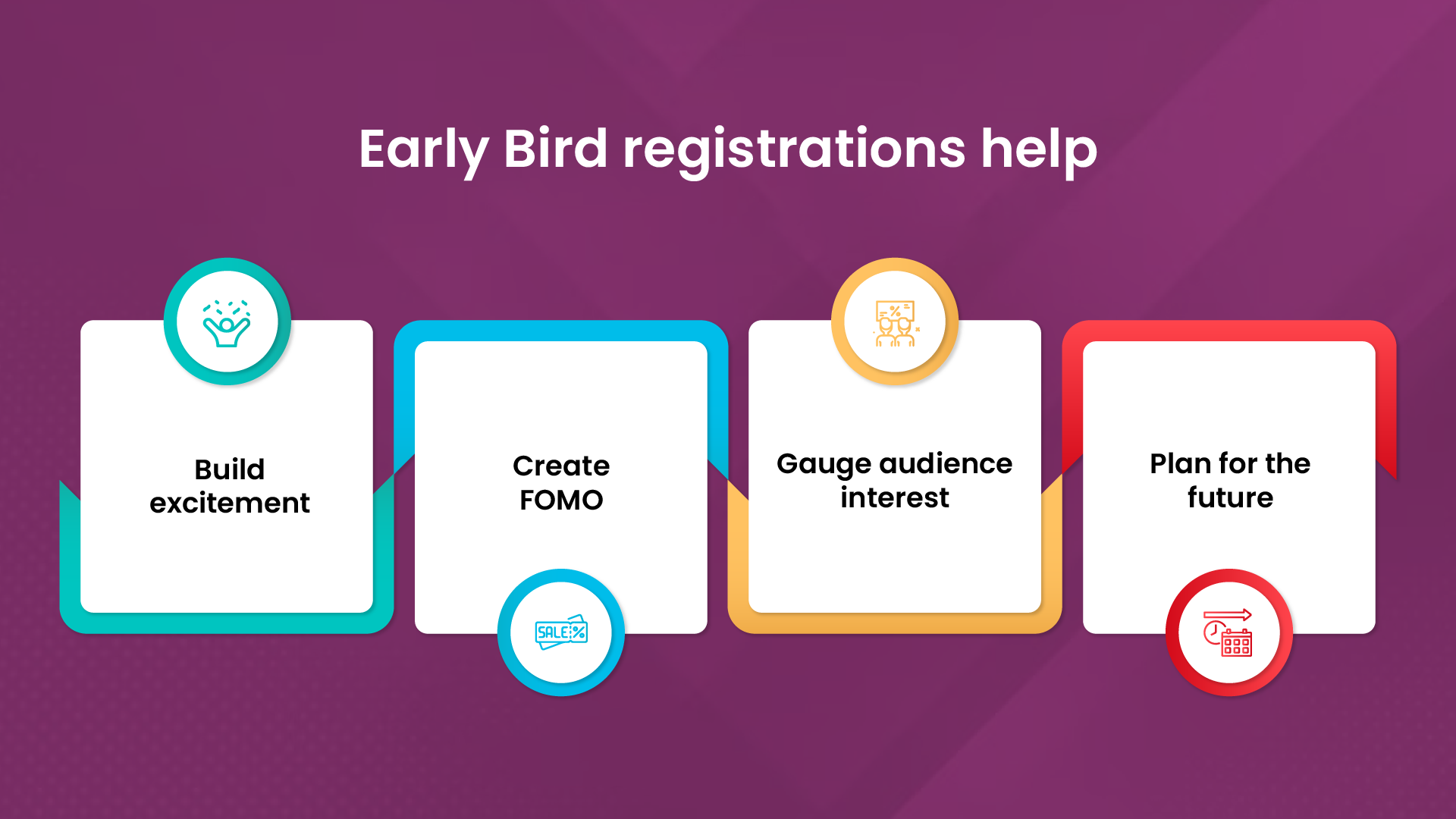
An early bird offer can support event planning in several ways, provided the discount is financially sustainable and the offer reaches the right audience.
Generate revenue earlier
Early registrations bring in ticket revenue before the event takes place. This can help organizers plan spending and manage cash flow, depending on when ticket payments are received and event expenses are due.
Estimate attendance more accurately
Early sales provide an initial indication of demand. Organizers can use registration trends to inform decisions about catering, seating, staffing, event materials, and venue requirements.
Early sales are an indicator, not a guarantee of final attendance. Continue monitoring registrations as the event approaches.
Reward attendees who commit early
People who plan ahead receive access to a lower price or an additional benefit. This can be especially useful for attendees who need time to arrange travel, obtain approval, or plan their schedules.
Support marketing decisions
Tracking early registrations can help you identify which email campaigns, social posts, partners, and other channels attract potential attendees. Use these findings to refine your promotion plan for the next registration phase.
Bonus Read: Event Gamification 101: Ideas to Engage Attendees Better
Why Early Bird Registration Benefits Attendees
Early bird registration gives attendees a reason to plan ahead and secure their place before the event gets closer.
- Lower ticket prices: Attendees can save money compared with the announced standard price.
- Greater planning flexibility: Early confirmation gives people more time to arrange travel, schedules, and work commitments.
- Access to limited-capacity events: Registering early can help attendees secure a place at events with limited capacity.
- Additional benefits: Some organizers include bonus sessions, networking opportunities, or other perks for early registrants.
These benefits should be clearly explained before someone registers. Make sure the offer terms, deadline, and any restrictions are easy to find.
\
How Long Should Early Bird Registration Last?
The right early bird registration period depends on your event size, audience, ticket price, and how much time attendees need to make a decision.
For a small local workshop, a shorter registration window may be enough. A large conference that requires travel, team approval, or accommodation planning may need a much earlier launch.
When choosing your deadline, consider:
- Event size: Larger events may need more time to reach their target audience.
- Audience planning needs: Business attendees may need budget approval, while festival attendees may need to arrange travel.
- Promotion schedule: Allow enough time to announce the offer, share event details, and send reminders before the deadline.
- Ticket sales performance: Review registrations regularly, but avoid changing a published deadline without a clear reason.
Publish the start date, end date, and any ticket limits from the beginning. If you use a countdown or limited-ticket message, make sure it reflects the actual offer terms.
How to Promote Early Bird Registration
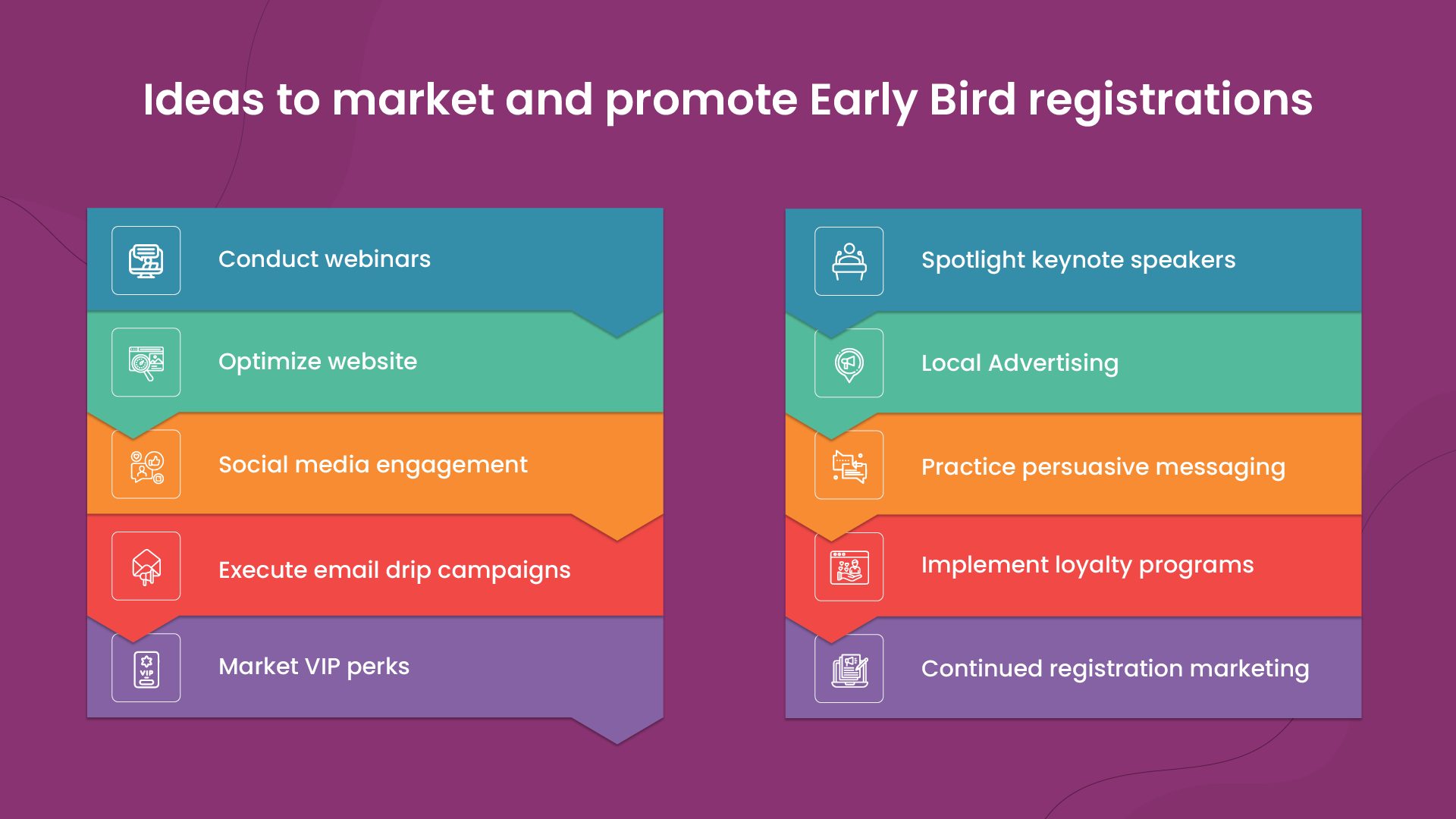
Once your early bird offer is ready, focus on communicating its value and deadline to the people most likely to attend.
1. Make the offer visible on your event page
Display the early bird price, standard price, savings, deadline, and ticket benefits near the registration button. Keep the registration process simple and ensure the page works well on mobile devices.
2. Announce the offer through email
Send an announcement explaining the event, the early bird price, and the deadline. Follow up with relevant event details, such as speakers or the agenda, and send a reminder before the offer expires. Avoid sending identical emails to everyone. Previous attendees, new subscribers, and people who have already registered may need different messages.
3. Use social media to explain the event's value
Share speaker announcements, session previews, event benefits, and short videos. Include the early bird deadline and a direct registration link where appropriate.
4. Ask speakers and partners to share the offer
Provide speakers, sponsors, and event partners with ready-to-use copy, graphics, and individual tracking links. This makes it easier for them to promote the event and helps you identify which partnerships generate registrations.
5. Send deadline reminders
Schedule a reminder before the early bird offer closes. Focus on the actual deadline and what attendees will gain by participating, rather than relying only on urgency-based language.
6. Explain the savings clearly
If you offer a discount, show the early bird price alongside the standard price. For example, a ₹2,500 early bird ticket compared with a ₹3,000 standard ticket saves ₹500. Use these figures only if they reflect your actual prices.
7. Reach relevant communities
Share the event with professional associations, industry groups, alumni networks, and local communities where promotion is permitted. Tailor the message to explain why the event is relevant to each audience.
8. Track registrations by channel
Use campaign tracking links or UTM parameters to compare traffic and registrations from email, social media, partners, and paid advertising. Evaluate successful registrations rather than clicks alone.
9. Reward returning attendees
If repeat attendance matters to your event, consider offering returning attendees early access or a relevant benefit. Make eligibility and offer terms clear.
10. Plan the next pricing stage
Before the early bird offer ends, prepare the next ticket tier and update your event page, email messages, and promotional materials. This keeps pricing consistent and avoids confusion after the deadline.
Common Early Bird Registration Mistakes to Avoid
Offering a discount without calculating costs
A lower ticket price can increase sales but may also reduce the money available to cover event expenses. Calculate your break-even point before deciding how many discounted tickets to offer.
Setting an unrealistic deadline
A deadline that is too short may not give potential attendees enough time to decide. Consider the event's price, audience, and planning requirements before setting the offer period.
Extending the offer repeatedly
Repeatedly extending an early bird deadline can weaken trust and teach potential attendees to wait for another extension. Set a realistic deadline and communicate any genuine changes clearly.
Focusing on registrations instead of revenue
More registrations do not automatically mean better financial results. Monitor ticket revenue, discounts, fees, and the number of tickets sold at each price tier.
Failing to explain the offer
Attendees should be able to understand the early bird price, standard price, deadline, ticket benefits, and restrictions without searching through multiple pages.
Stopping promotion when early bird sales end
The end of an early bird offer is not the end of event marketing. Continue promoting the agenda, speakers, attendee benefits, and remaining registration options at the next announced price.
\
How KonfHub Can Help You Manage Early Bird Registration
Event organizers need a clear way to manage ticket prices, registration periods, and different ticket categories. KonfHub supports event ticketing workflows, including multiple ticket types and early bird offers, subject to the available ticket settings.
When setting up your offer, make sure the early bird price, eligibility rules, start and end dates, and ticket limits match the terms published on your event page.
You can also use the event registration data available to you to review ticket sales and understand how registrations progress over time.
Before launching, test the registration process and confirm that the correct ticket prices and availability are displayed to attendees.
Schedule a demo with KonfHub today to see how you can craft an immersive and unforgettable event experience!
FAQs
1. What is an early bird registration strategy?
An early bird registration strategy offers attendees a lower ticket price or an additional benefit if they register before a set deadline or ticket limit. It helps organizers encourage earlier bookings, estimate demand, and plan event expenses.
2. How do you create an early bird registration strategy?
Set a registration goal, calculate a financially sustainable ticket price, choose a deadline or ticket limit, communicate the benefits, promote the offer through relevant channels, and track registrations and revenue.
3. How much discount should you offer for early bird registration?
There is no universal discount that works for every event. Calculate your costs, compare similar events, and consider what your audience is willing to pay. Choose a discount that encourages early bookings without making the event financially unsustainable.
4. When should early bird registration start?
Start early bird registration when you have enough event details to explain the value of attending and give people a clear way to register. Large conferences may need a longer lead time than small local workshops, particularly when attendees need to arrange travel or obtain approval.
5. How long should early bird registration last?
The duration depends on your audience, event size, ticket price, and promotion schedule. Choose a period that gives potential attendees enough time to decide while allowing you to promote the offer effectively.
6. What is the difference between early bird and regular registration?
Early bird registration is available at a special price or with added benefits before a specified deadline or ticket limit. Regular registration follows the standard price or ticket terms announced for the next stage.
7. How do you promote early bird registration?
Promote the offer through email campaigns, social media, speakers, sponsors, partners, and relevant communities. Clearly communicate the price, benefits, deadline, and registration link, then track which channels generate completed registrations.
8. How can you measure the success of an early bird registration campaign?
Track the number of early bird tickets sold, revenue generated, registration page conversion rate, cost per registration, and the performance of each promotional channel. Compare the results with your original target and event budget to determine whether the offer worked.
About the author
KonfHub is an AI-powered, GDPR-compliant platform for seamless ticketing, secure attendee management, and smooth event operations. Say goodbye to complexity and hello to seamless, powerful event management!
Comments
Join the discussionNo comments yet. Be the first to comment.