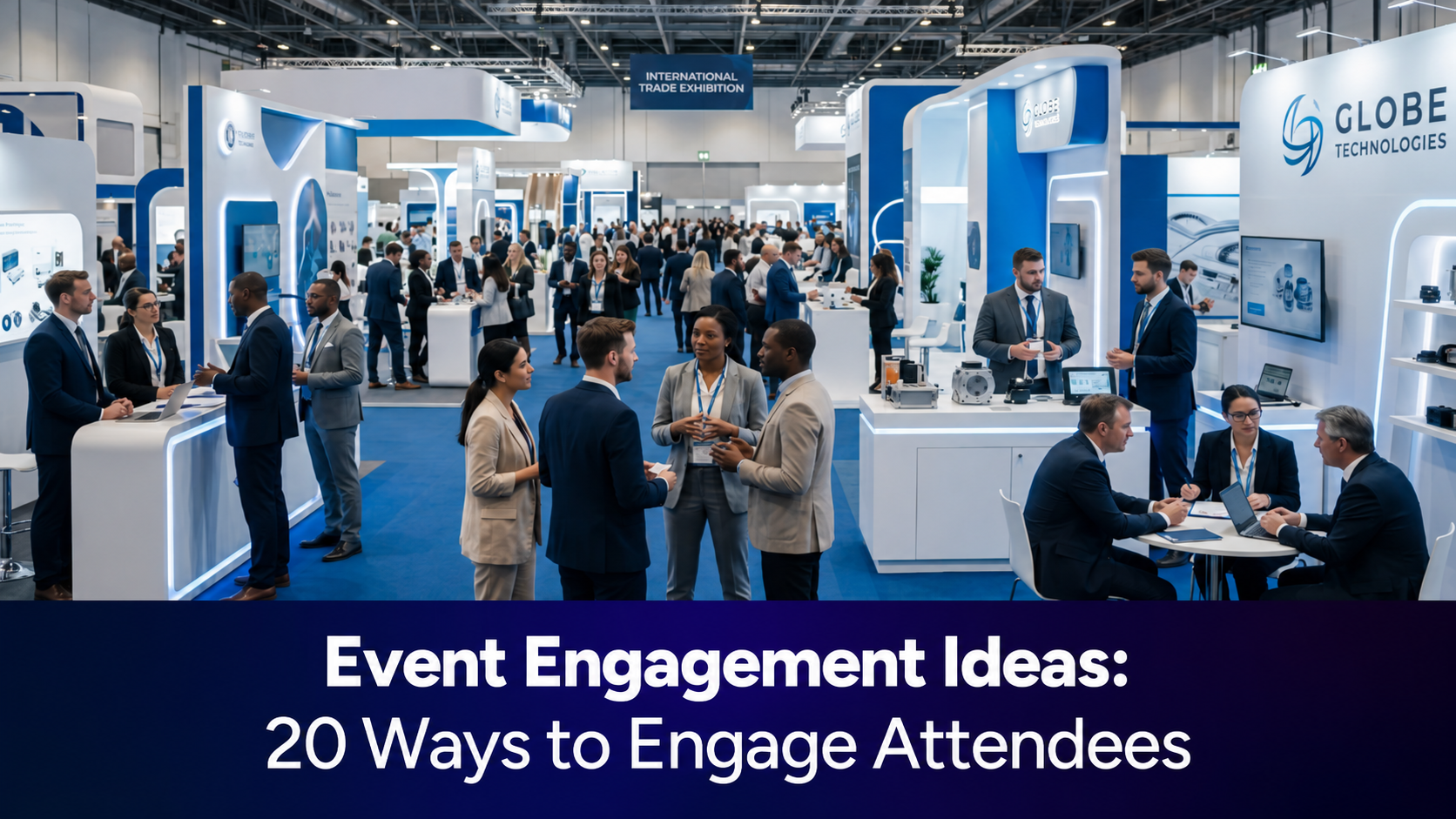
Keeping attendees engaged is about more than filling an event agenda with activities. People are more likely to participate when they have a clear reason to contribute, connect, learn, or interact.
The best event engagement strategies are designed across the entire attendee journey, from the moment someone registers to what happens after they leave.
That could mean asking attendees to shape a session before the event, using live polls during a presentation, creating structured networking opportunities, or following up with useful content afterward.
In this guide, you'll find practical event engagement ideas for in-person, virtual, and hybrid events, along with tips for choosing the right activities and measuring whether they actually worked.
Let’s get right into it!
What Are Event Engagement Ideas?
Event engagement ideas are activities and strategies that encourage attendees to actively participate, interact, learn, network, or contribute before, during, and after an event.
Examples include live polls, Q&A sessions, structured networking, gamification, attendee surveys, event apps, interactive workshops, and post-event communities. The right idea depends on your event format, audience, goals, and available resources.
What Is Event Engagement?
Event engagement refers to the ways attendees participate, interact, connect, and respond throughout an event. It goes beyond attendance.
Someone who attends a session but spends the entire time passively watching has a different level of engagement from someone who asks questions, participates in a poll, connects with other attendees, or applies what they learned. Engagement can happen before the event, during sessions and activities, and after the event through follow-up content and community interactions.
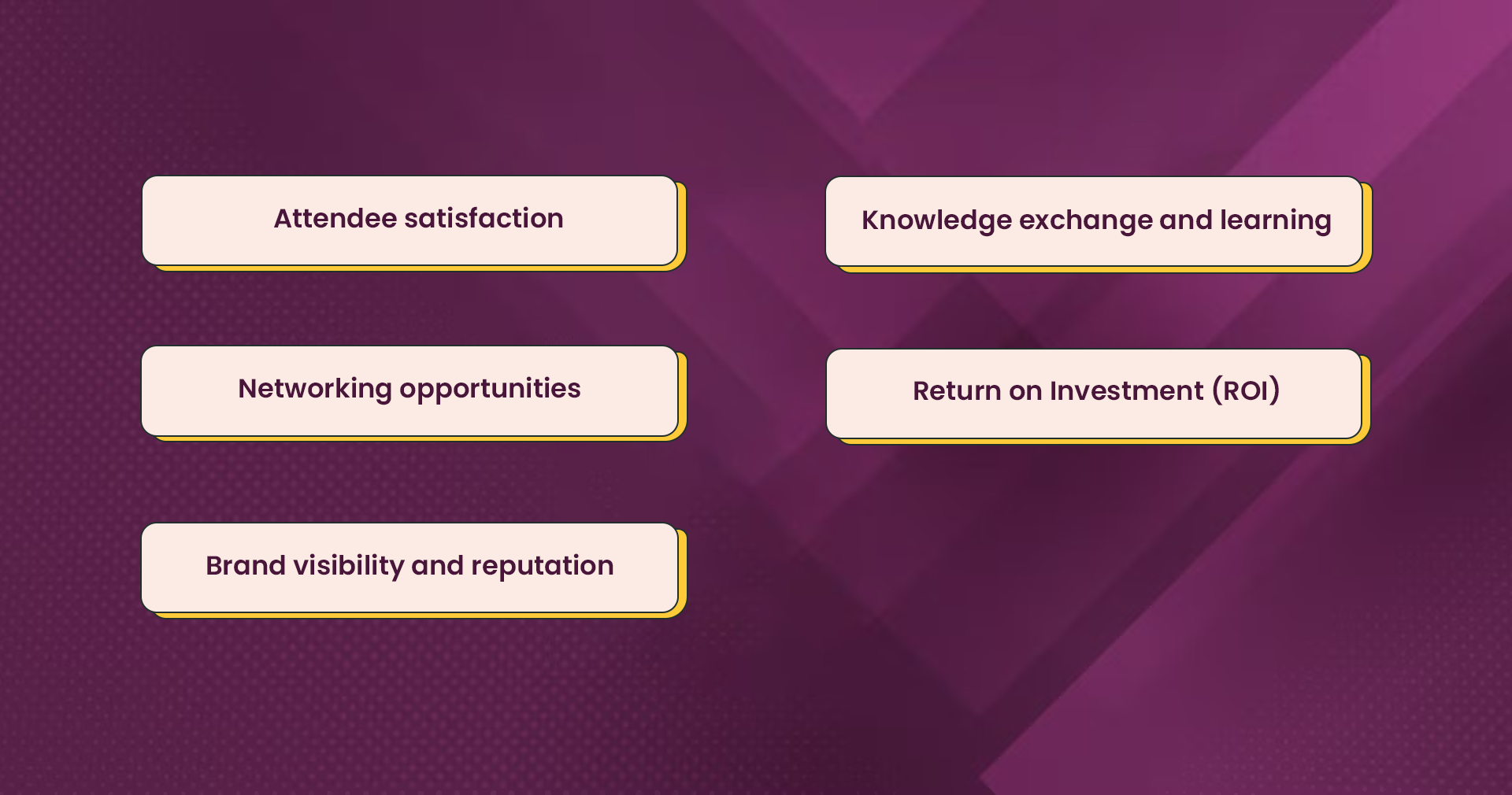
Why Is Event Engagement Important?
Improve the attendee experience
Explain that engagement gives attendees opportunities to participate instead of consuming content passively.
Make sessions more interactive
Explain how Q&A, polls, workshops and audience input can make sessions more responsive to attendee needs.
Create better networking opportunities
Explain that simply providing a networking area doesn't guarantee networking. Structured formats can help.
Increase sponsor and exhibitor interaction
Explain how engagement activities can direct relevant attendee traffic toward sponsors without making the experience feel like a sales pitch.
Learn what attendees actually want
Explain how surveys, polls and behavioral data can inform future event planning.
Event Engagement Across the Attendee Journey
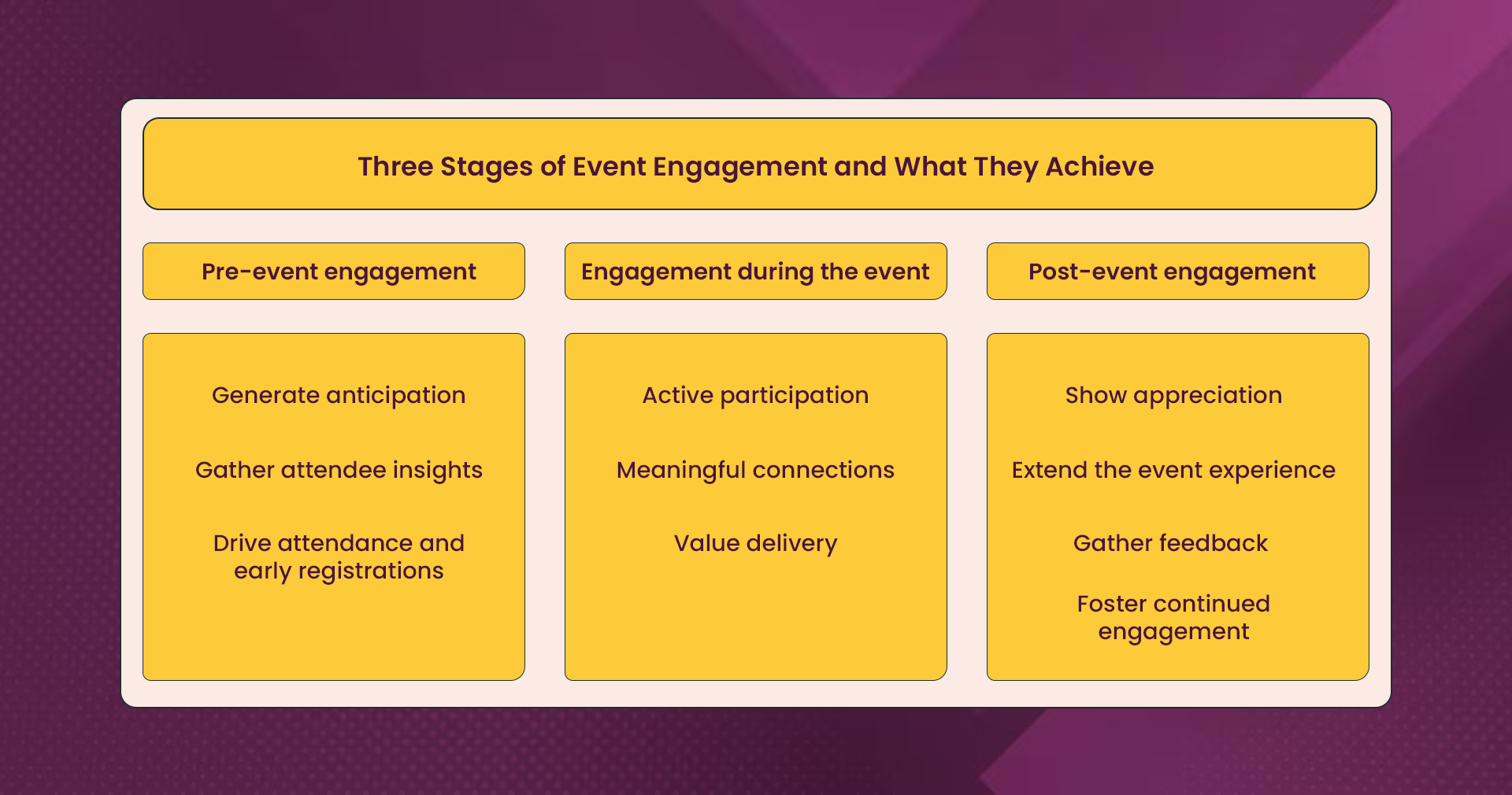
Stage | Goal | Examples |
Before the event | Build anticipation and encourage participation | Surveys, speaker content, polls, personalized communication |
During the event | Encourage interaction and participation | Q&A, live polls, networking, workshops, gamification |
After the event | Continue the relationship and gather feedback | Surveys, recap content, community, follow-up sessions |
20 Event Engagement Ideas to Increase Attendee Participation
The best event engagement activities give attendees a reason to participate, connect, learn, or contribute, rather than simply giving them something to do. You don't need to use every idea at once. Choose activities based on your event type, audience, goals, and available resources.
Here are 20 practical event engagement ideas you can use before, during, and after your event.
Before the Event
1. Ask Attendees What They Want to Learn
Use a short survey during registration or in a pre-event email to understand what attendees expect from the event.
Ask questions such as:
What topics would you like to learn about?
What is your biggest challenge related to the event topic?
Which sessions are you most interested in?
What would make the event more valuable for you?
Use the responses to refine sessions, choose discussion topics, or create relevant content before the event.
This also shows attendees that their opinions can influence the event experience.
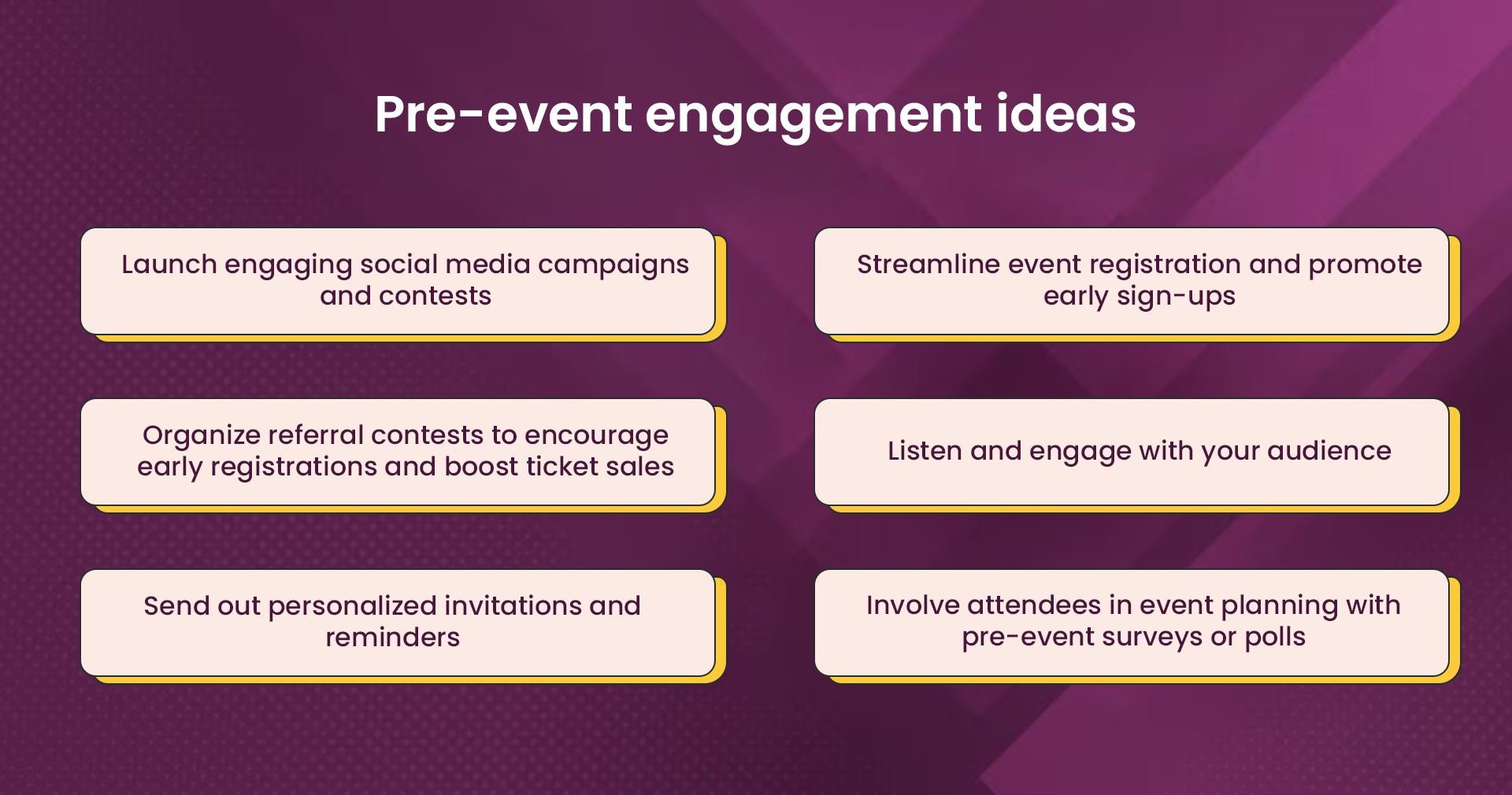
2. Let Attendees Vote on Session Topics
Give attendees a chance to influence the agenda by allowing them to vote on topics, discussion questions, or session formats.
For example, a marketing conference could ask attendees to choose between topics such as AI in marketing, SEO trends, or content automation.
Share the results with attendees and, where possible, use them to shape the program. When people see that their input has an impact, they have a stronger reason to participate.
3. Create Speaker Introductions and Session Previews
Start introducing speakers and sessions before the event instead of waiting until the event begins.
Share short speaker videos, quotes, interviews, session previews, or questions that speakers will address.
For example, a speaker could record a short video answering:
"What's one mistake businesses should avoid when using AI for marketing?"
This gives potential attendees a preview of the value they can expect and gives registered attendees something to look forward to.
4. Create an Attendee Networking Challenge
Networking can be difficult when attendees don't know how to start a conversation. Give them a simple challenge before or during the event.
For example:
"Meet three people who work in a different role from yours and exchange one useful idea."
You could also provide conversation starters based on the event topic or industry.
The goal is to make networking more structured without making it feel forced.
5. Build an Event Community Before the Event
Create a space where registered attendees can interact before the event.
Depending on your audience, this could be an event app, LinkedIn group, Slack community, WhatsApp group, or another relevant platform.
Use the community to:
Introduce speakers
Share event updates
Start topic discussions
Ask questions
Share resources
Help attendees connect with each other
Avoid turning the community into a stream of registration promotions. The focus should be on creating useful conversations before attendees meet.
During the Event
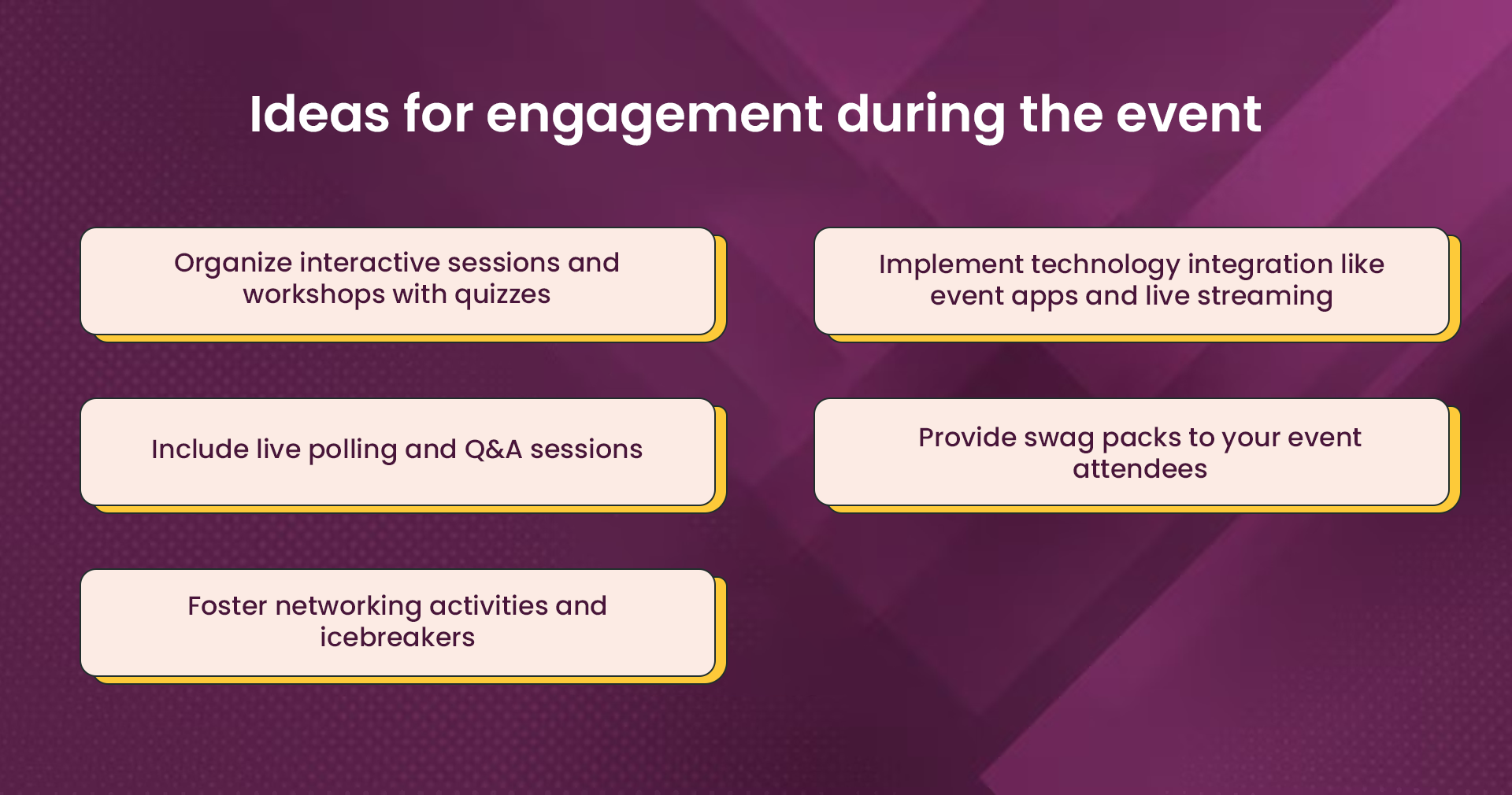
6. Use Live Polls During Sessions
Live polls are a simple way to turn a presentation into a two-way conversation.
Instead of having attendees passively listen to a speaker, ask questions that allow them to share their opinions or experiences.
For example:
"What is your biggest challenge with event marketing?"
Display the results and let the speaker use the responses to guide the discussion.
For better participation, keep polls short and use questions that are directly relevant to the session.
7. Add Live Q&A With Audience Questions
Give attendees a clear opportunity to ask questions during sessions using Live Q & A.
You can collect questions through an event app, online form, chat, or other audience response tool. For larger events, allow attendees to upvote questions so the speaker or moderator can prioritize the most relevant ones.
For hybrid events, make sure remote attendees have the same opportunity to participate as people attending in person.
8. Turn Sessions Into Interactive Workshops
Not every session needs to be a presentation.
Turn selected sessions into workshops where attendees solve a problem, complete an exercise, discuss a scenario, or create something during the session.
For example, instead of a speaker simply explaining how to create a marketing strategy, attendees could work through a simple framework and create their own strategy during the workshop.
Interactive formats are particularly useful when the goal is learning or skill development.
9. Organize Structured Networking
Simply announcing a "30-minute networking break" does not guarantee that people will network.
Give attendees a structure that makes it easier to start conversations. You could organize:
Speed networking
Roundtable discussions
Interest-based groups
Role-based meetups
Topic tables
Small group discussions
You can also provide conversation prompts related to the event topic to help attendees move beyond basic introductions.
10. Add Gamification With a Clear Goal
Gamification can encourage attendees to participate in activities that support your event goals.
You could award points or badges for:
Participating in quizzes
Attending selected sessions
Completing networking challenges
Visiting exhibitor booths
Answering questions
Completing an event passport
For example, a conference could award points when attendees attend sessions, complete a knowledge challenge, and connect with other participants.
Don't add points to every possible action. Choose behaviors that genuinely contribute to the attendee experience.
11. Create an Event Scavenger Hunt
A scavenger hunt can encourage attendees to explore the venue, sessions, sponsors, and exhibitors.
For example, attendees could be asked to:
Find a particular exhibitor
Answer a question about a session
Visit selected booths
Complete a networking challenge
Find information hidden around the venue
You can provide small rewards for completion, but the activity should still provide value even without a prize.
12. Use an Event App for Personalized Participation
An event app can give attendees a central place to access information and participate in the event.
Depending on the platform, attendees may be able to:
Build a personal agenda
Receive session reminders
Participate in polls
Ask questions
Connect with other attendees
View event updates
Access speaker or session information
The key is to use the app to make participation easier, rather than adding another tool that attendees are expected to manage.
13. Give Attendees Ways to Contribute Content
Attendees don't always have to be consumers of event content. Give them opportunities to contribute.
You could invite attendees to share:
Questions
Industry tips
Session takeaways
Photos
Short videos
Opinions
Experiences related to the event topic
For example, after a keynote, ask attendees to share their biggest takeaway on a community board or event platform.
This creates a more participatory experience and can generate useful content around the event.
14. Create Interactive Sponsor and Exhibitor Experiences
Sponsors and exhibitors can become part of the attendee experience instead of simply having a booth with promotional materials.
Encourage interactive experiences such as:
Product demonstrations
Mini workshops
Expert consultations
Quizzes
Challenges
Live demonstrations
Interactive displays
The activity should provide a useful reason for attendees to interact with the sponsor. Simply asking attendees to visit a booth and collect promotional material is unlikely to create meaningful engagement.
15. Use a Live Social or Content Wall
A live content wall can display selected attendee posts, event photos, poll results, questions, or other approved content during the event.
For example, you could display attendee responses to a question such as:
"What's the biggest takeaway from today's sessions?"
This can create a sense of participation and help attendees see what others are discussing.
If you display attendee-generated content publicly, make sure you have appropriate permission and moderation processes in place.
After the Event
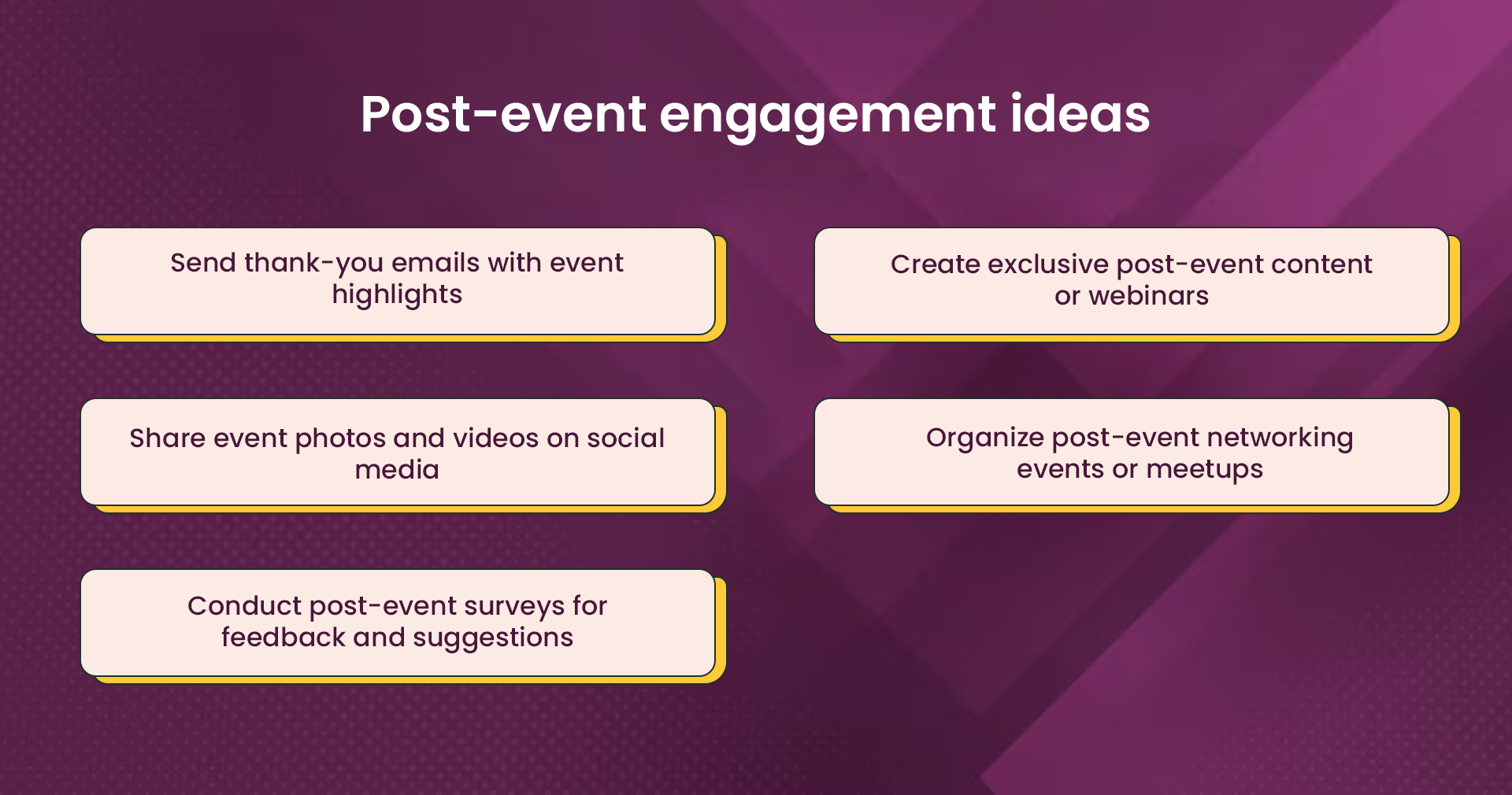
16. Send a Personalized Thank-You and Event Recap
Don't let communication stop when the event ends.
Send attendees a follow-up message thanking them for participating and providing useful event resources.
Depending on the event, include:
Key takeaways
Session recordings
Presentation materials
Event photos
Speaker resources
Recommended next steps
A useful follow-up gives attendees another reason to engage with your organization after the event.
17. Share Attendee Photos, Videos, and Takeaways
Continue the event conversation by sharing photos, videos, attendee quotes, and interesting takeaways.
You can also invite attendees to share their own experiences and tag the event or organization where appropriate.
This helps extend the event experience while giving attendees an opportunity to contribute to the post-event conversation.
AI photo galleries where people can find their own pictures from the event and share in social media can increase post-event engagement.
18. Run a Short Post-Event Survey
Ask attendees what they thought about the event while the experience is still fresh.
Keep the survey focused. Useful questions could include:
Which session did you find most useful?
What did you enjoy most?
What could we improve?
Did you make useful connections?
What topics would you like to see next time?
Would you attend another event from us?
Use the responses to identify patterns rather than relying on one or two comments.
19. Continue the Conversation After the Event
Post-event engagement shouldn't end with a thank-you email.
Keep the conversation going through an online community, follow-up discussion, newsletter, virtual session, or future networking opportunity.
For example, if your event focused on AI in marketing, you could host a follow-up discussion a few weeks later where attendees share how they applied what they learned.
This turns a one-time event into an ongoing relationship with your audience.
20. Turn Event Content Into On-Demand Resources
Your event can continue providing value long after the final session ends.
Repurpose useful event content into:
Session recordings
Expert interviews
Short videos
Key takeaway articles
Downloadable guides
Speaker quotes
FAQ content
Educational resources
Share the most relevant resources with attendees based on their interests where possible.
Which Event Engagement Ideas Should You Choose?
Your goal | Engagement ideas to consider |
Increase session participation | Live polls, Q&A, workshops, quizzes |
Improve networking | Speed networking, roundtables, networking challenges |
Increase sponsor interaction | Sponsor challenges, demos, interactive booths |
Encourage learning | Workshops, quizzes, audience questions |
Build community | Pre-event groups, attendee discussions, post-event communities |
Increase participation in a virtual event | Polls, chat, Q&A, breakout discussions |
Encourage event exploration | Scavenger hunts, event passports, gamification |
Collect attendee insights | Surveys, polls, feedback sessions |
How to Measure Event Engagement
Start by defining what engagement means for your event.
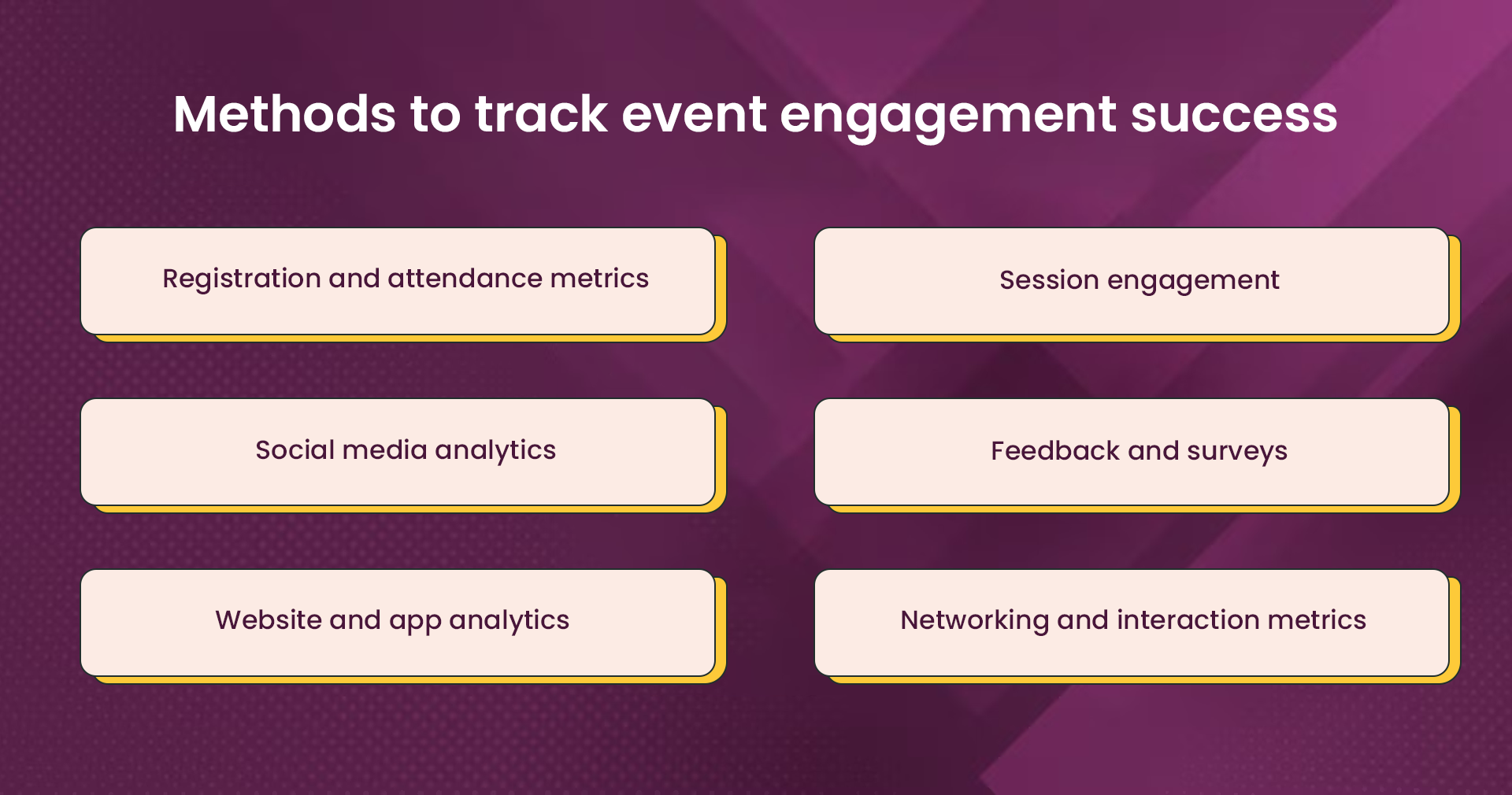
Goal | Metrics |
Session participation | Poll responses, questions, participation rate |
Networking | Connections, meetings, conversations |
Learning | Quiz results, workshop completion, feedback |
Sponsor engagement | Booth visits, interactions, demos |
Community engagement | Posts, replies, active participants |
Overall experience | Satisfaction, NPS, feedback |
Future interest | Repeat registrations, referrals |
Avoid relying on a single engagement metric. A high number of app clicks, for example, doesn't necessarily mean attendees had a better experience. Combine behavioral data with attendee feedback to understand what actually worked.
How KonfHub Can Support Event Engagement
KonfHub can support several parts of the attendee journey, from registration and communication to participation and post-event feedback. The right features to use depend on the type of event and the engagement goals you're trying to achieve.
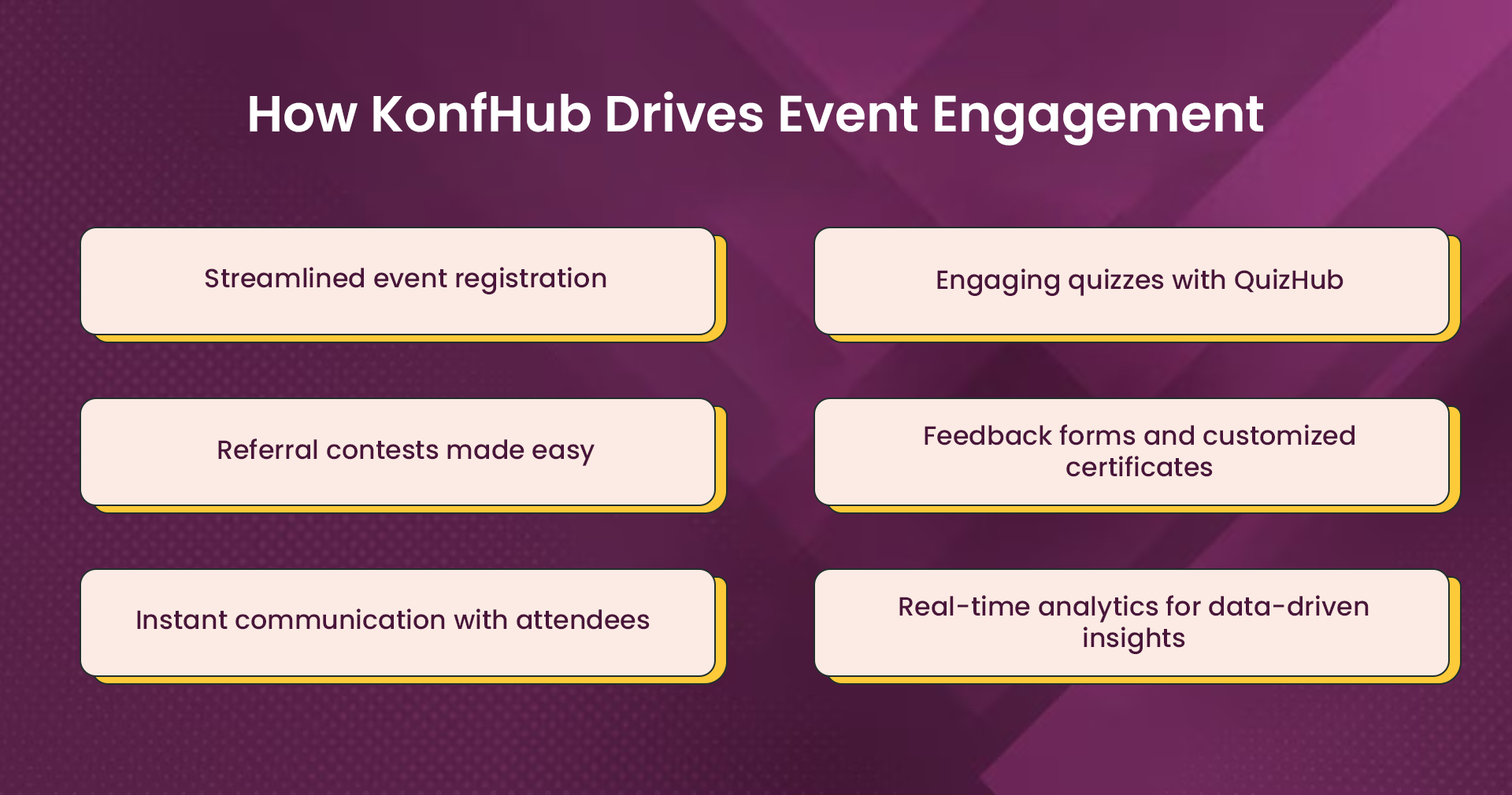
Streamlined event registration - From creating customized tickets to ready-made landing pages, seamless check-in apps, and advanced analytics and tracking, KonfHub simplifies the entire registration process, ensuring a seamless experience for both organizers and attendees.
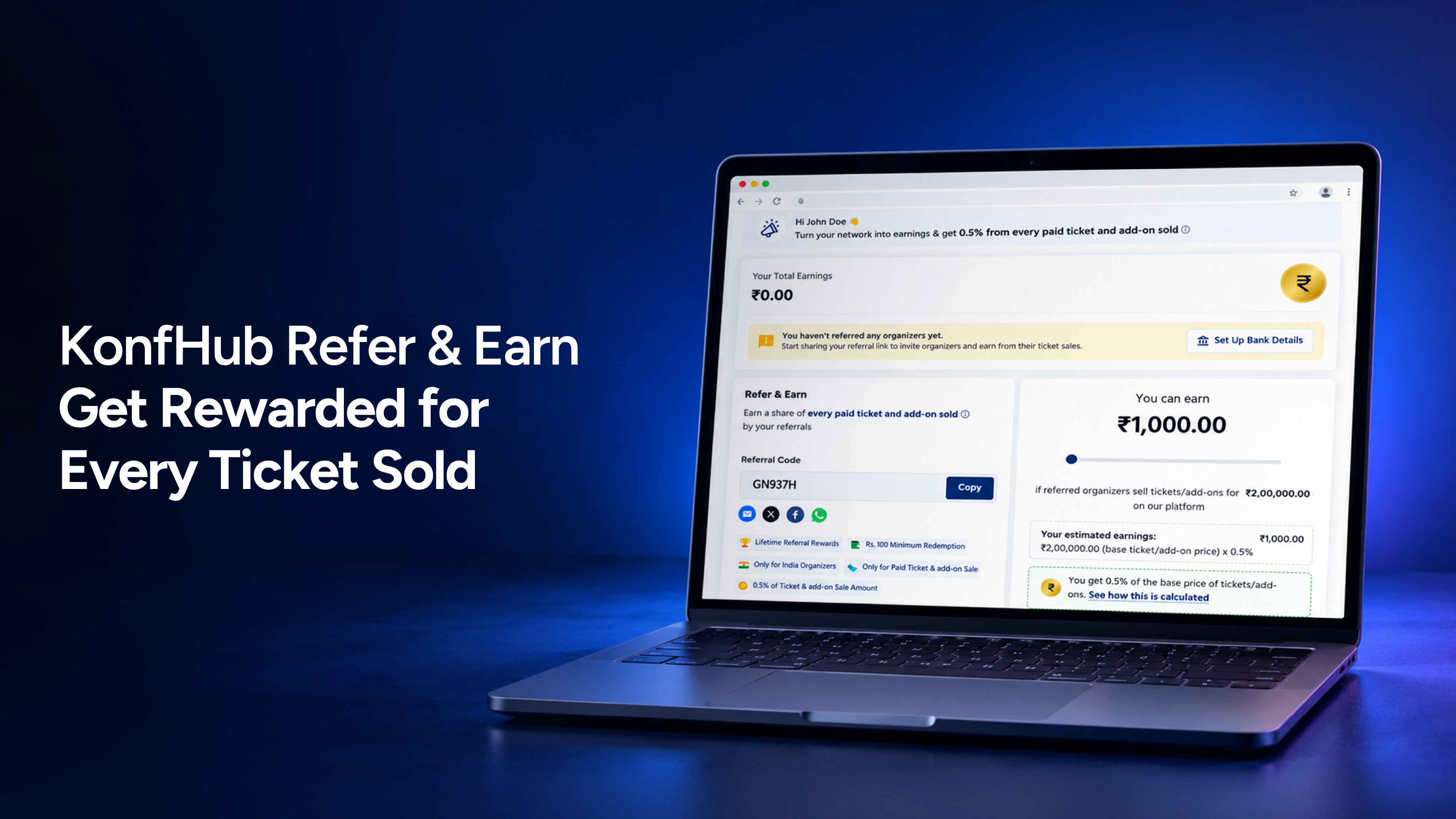
Referral contests made easy - Boost ticket sales and registrations with KonfHub's referral contests feature. By hosting contests with a built-in leaderboard, KonfHub encourages attendees to actively promote your event and compete for rewards, generating organic buzz and driving higher attendance.
Instant communication with attendees - In today's fast-paced world, timely communication is key. KonfHub offers more than just email communication. With integrated Whatsapp functionality, organizers can instantly share urgent updates, important news, and event reminders with attendees, ensuring no one is left behind.
Engaging with live Q & A and polls in the event app - Engaging during the event can become very easy with live Q & A and live polls if it is integrated in the event app itself.
Feedback forms and customized certificates with CertHub - KonfHub empowers organizers to create customized digital certificates for attendees in minutes using free templates. Additionally, organizers can easily gather valuable feedback through intuitive forms, gaining insights to improve future events.
Real-time analytics for data-driven insights - From ticket sales data to in-depth marketing campaign analysis, organizers can gain valuable insights into registration sources and campaign effectiveness. Features like registration tracking and UTM parameter analysis ensure informed decision-making and continuous improvement.
With KonfHub's innovative features and user-friendly interface, event organizers can elevate their engagement strategies and deliver exceptional attendee experiences.
From hassle-free registration to referral contests, instant communication, engaging quizzes, feedback collection, and data-driven analytics, KonfHub is the ultimate event engagement companion that empowers organizers to create memorable and successful events.
Schedule a demo with KonfHub today to see how you can elevate your event’s engagement and improve the attendee experience to the best it can be!
FAQs
What are event engagement ideas?
Event engagement ideas are activities and strategies that encourage attendees to participate, interact, learn, network, and contribute throughout an event. Examples include live polls, Q&A sessions, networking activities, workshops, gamification, attendee surveys, and post-event communities.
What are the best ways to engage attendees at an event?
The best approach depends on your event type and audience. Effective options include live polls, interactive workshops, structured networking, Q&A sessions, gamification, event apps, audience challenges, and attendee-generated content. Choose activities that support a specific goal rather than adding too many activities at once.
How do you engage attendees before an event?
You can engage attendees before an event by asking for their input through surveys and polls, introducing speakers, sharing session previews, creating an event community, and providing networking opportunities before the event. These activities can build anticipation and help attendees feel involved before they arrive.
How do you keep attendees engaged during an event?
Use interactive formats instead of relying entirely on presentations. Live polls, Q&A sessions, workshops, networking activities, quizzes, gamification, and audience discussions can encourage active participation. Keep activities relevant to the session and make participation simple.
What are some event engagement ideas for virtual and hybrid events?
Virtual and hybrid events can use live polls, chat discussions, Q&A, breakout rooms, quizzes, virtual networking, collaborative activities, and event apps. For hybrid events, make sure remote attendees have meaningful ways to participate rather than simply watching a livestream.
How can you improve attendee engagement at a conference?
Start by identifying what you want attendees to do, such as learn, network, interact with speakers, or engage with exhibitors. Then choose activities that support those goals. For conferences, interactive sessions, structured networking, live Q&A, polls, gamification, and sponsor challenges can work particularly well.
How do you measure event engagement?
Measure engagement using metrics that match your event goals. You can track poll and Q&A participation, session attendance, networking activity, quiz participation, app interactions, attendee feedback, sponsor interactions, community activity, and repeat registrations. Combine behavioral data with attendee feedback to understand what actually worked.
How can you make event engagement more inclusive?
Offer different ways to participate instead of relying only on activities such as public speaking or competitive games. Use anonymous polls, written questions, small-group discussions, optional networking, accessible digital tools, and both in-person and remote participation options. This gives attendees more flexibility to engage in ways that suit them.
About the author
KonfHub is an AI-powered, GDPR-compliant platform for seamless ticketing, secure attendee management, and smooth event operations. Say goodbye to complexity and hello to seamless, powerful event management!
Comments
Join the discussionNo comments yet. Be the first to comment.